Showing posts with label travel. Show all posts

Monday, April 14, 2014

ELIZABETH GILBERT | "Take me with you in spirit ... Tell us what you find. I will follow you later"

I saw this Facebook entry by Elizabeth Gilbert today. Travels is on the top of my mind lately, since I came back from Amsterdam and Paris just a few weeks ago. The question of why we travel is, and how it changes us. I thought she but it rather well. But most of all, this lines, that a neighbour said to her before she embarked on the journey that would lead to Eat, Pray, Love:

"Take me with you in spirit. Take all of us with you, who dream of someday doing this but who right now staying home and taking care of the contracts we have signed with our lives. Tell us what you find. I will follow you later."

Travel well, and when you return, share.

WHY WE MUST SOMETIMES GO...

Right now I'm reading for the first time the great memoir TRACKS by Robyn Davidson — a classic of both women's and Australian literature. For those of you who aren't familiar with this book, it's wonderful — the chronicle of a woman who, back in the 1970s, rode 1,700 miles all alone across the Australian Outback with three camels.

Why did she do it? What I love about this story is that she does not ever really provide a why. She did it because she needed to do it.

A lot of people told her she was crazy to set out on such a dangerous journey, and that she would probably die during it. But, Davidson recounts, she had one conversation before she left with an older female friend who told her: "I really like what you're doing...Getting off your butt and actually doing something is important for all of us...It's important that we leave each other and the comfort of it, and circle away, even though it's hard sometimes, so that we can come back and swap information about what we've learned, even if what we do changes us, and we risk not recognizing each other when we return."

THAT IS WHY WE MUST SOMETIMES GO AWAY.

Not only for our own benefit, but for the benefit of each other. To model another way of being. To represent, out there in the wild world. To bring back the treasure of sharing what we have learned. I remember the week before I went traveling for EAT PRAY LOVE, a neighbor (a mother of two young children) gave me a long hug and said into my ear, "Take me with you in spirit. Take all of us with you, who dream of someday doing this but who right now staying home and taking care of the contracts we have signed with our lives. Tell us what you find. I will follow you later."

And she did — about ten years later. At which point, I gave her that same hug and said the same words into her ear. As I have said those exact same words to countless other people, as they are about to embark on their own journey. Go away now, but take us with you in spirit; tell us what you learned when you return.

If it's time for you to go, go NOW. But take notes. Think of your journey toward self-discovery and adventure as a community service.

You'll make us all better for it,

HEART,

LG

Monday, March 03, 2014

Elizabeth Gilbert & Janneke Siebelink at the Hortus Botanicus in Amsterdam

It's not a secret that I enjoy Elizabeth Gilbert's writings. I believe she has a curious passion about the subjects she writes about, which comes through in her writing. Her books always led me to want to learn more, to see more. For me, that is what good writing is about - it makes you open to new experiences, more open in your hearts and minds.

I read "The Signature of All Things" last year. I saw just one copy of the book in a bookstore in New York and I grabbed it. I didn't want a bag for the book, and the guy at the bookstore just remarked, "You're going to get into it straightaway?" He was right.

I was also paying attention to the publicity on the book at that time, and I knew it wasn't supposed to be available yet (which made me wonder how the bookstore acquired their ONE copy.) The book probably taught me more about botany than I ever needed to learn, but most of all, the "Dutch-ness" of many of the characters made me curious about Amsterdam, and I wanted to see the Hortus Botanicus, where the protagonist of the book eventually ended up.

So here I am, planning for a trip to Amsterdam in a few weeks time. Anyway, here's the video of Elizabeth Gilbert at the Hortus Botanicus. Thank you, Alma, and Elizabeth Gilbert. I will definitely make a trip down there when I am in Amsterdam.

Monday, March 16, 2009

My Flickr Records of London Trip Feb/March 2009

Just a note: I will not be updating my pictures to flickr for a while. Just found out my internet service provider has blocked my access to flickr.com. I am distressed by this, because I have only just signed up for a paid account to flickr and now this.


Here's some of the pictures from my recent London trip. I wish there's more - but most of the time I'm busy looking instead of keeping records.

Trying to stay in the moment, yeah? :) But no worries - there's always a chance for a second trip.

Saturday, September 13, 2008

BOOKS | Thirteen Into Dubai

There is reason for joy!

Some of my friends will be going to Dubai this October, and they are more than willing to help bring over some personal items for me. Since the books are the heaviest items in my luggage, I will be asking my friends to help bring over my books.

I am so glad for friends.

You might like to know the final list of books I have arranged to be brought to Dubai. Actually, you might not be interested at all, but I'm going to list them here anyway.

1. Vegetarian Cooking for Everyone, Deborah Madison
~ Since eating out in Dubai will be expensive, most of my meals will probably have to be prepared at home. When I lamented to my friends that the thought of having to eat my own cooking everyday depresses me, The Lawyer told me, "What's why you get better."

I know practice makes perfect, but I also know I need some help. It's madness to bring a 752-paged cookbook onto the plane, but I actually did pack it in my backpack earlier. I'm so glad someone is helping me bring it over.

Did I mention how grateful I am for friends?

2. The Idiot, Fyodor Dostoevsky [translated by Richard Pevear and Larissa Volokhonsky]
~ I'm trying to finish the volume but I may not be able to do so, which means it will have to come along. It's a heavy hardcover from the Everyman's Library. I'm definitely not being practical here. :\

3. What I Talk About When I Talk about Running, Haruki Murakami [translated by Philip Gabriel]
~ I just received my copy last week, so I had no time to pack it into a carton. It's coming along.

4. The Histories, Herodotus
~ I swear I need to finish this volume soon.

5. & 6. The final two volumes of Marcel Proust's In Search of Lost Time - The Prisoner and the Fugitive & Finding Time Again
~ Like I've said many times: I'm determined to finish the Proustian epic

7. Soft City, Jonathan Raban
~ Written in 1974, it's supposed to be part travelogue, part memoir, part essay on navigating the urban labyrinth. I mooched it some time back because Jonathan Raban was supposed to be one of those writers whose books defined classification.

It's a small mass paperback that slipped me as I was packing books into boxes. I decided to bring it along for variety since it's so compact.

8. Conditions of Love, John Armstrong
~ A slim volume on the philosophy of love. Again, for the variety, and because it's compact.

9. & 10. Asylum, Patrick McGrath & The Ghost Writer, John Harwood
~ For the R.I.P. III Challenge

11. Of Human Bondage, W. Somerset Maugham
~ I have a Bantam mass paperback version of this from years back. It's supposed to be one of Maugham's finest.

12. The Name of the Rose, Umberto Eco [translated by William Weaver]
~ I'm reading it right now. It's in a handy Warner mass paperback. The pages are yellow and stained with oily fingerprints from the last time I brought it with me to Koh Samui.

13. Sitting: A Guide to Buddhist Meditation, Diana St. Ruth
~ To remind me of what is important.

Thirteen is auspicious, right?

Thursday, June 05, 2008

Travelers without visas will soon register before U.S. trip

WASHINGTON (AP) — The United States said Tuesday that it will require visitors who are allowed to enter the country without visas to register biographical details online at least three days before they travel.

Homeland Security Secretary Michael Chertoff, who announced the changes, said they will help the United States boost the security of its visa-free travel program by allowing the government to screen visitors before they travel. Currently, visitors fill out paper forms en route and are screened by U.S. customs agents upon arrival.

The U.S. will begin implementing the changes in August, Chertoff said. Online registration will be mandatory for all visa-free travel by Jan. 12.

[Full story here ]


As far as I know, there is supposed to be a visa reciprocity agreement between the different countries. There are currently 27 countries whose citizens are not required to obtain visas for U.S. entry, including those in most of western Europe as well as Andorra, Australia, Brunei, Japan, New Zealand and Singapore. Eight other countries — among them the Czech Republic, Hungary and South Korea — are expected to be admitted to the visa waiver program.

I understand the security concerns here, and registering online would definitely be a lot more convenient than having to queue at the embassy for a visa. But what makes this new policy "safer"? What is to stop potential terrorists from registering false personal information? And say, you forget to register 3 days before you fly into the US? What then?

Why is this interesting to me?

I hope to make a short trip to New York later this year. I just hope I don't get myself screwed over by sudden changes in visa policies.

Say, anyone has recommendations for places (not too expensive please) to check out when I'm in New York? Quirky bookstores or vegetarian-friendly restaurants that I must visit?

Wednesday, April 30, 2008

Why do New Yorkers Seem Rude?

From the Smithsonian magazine, Joan Acocella's essay on Why do New Yorkers seem rude?

Psychologists tell us that the more stimuli people are bombarded with, the more they will recede into themselves and ignore others. So why is it that New Yorkers, who are certainly confronted with enough stimuli, do the opposite? I have already given a few possible answers, but here's one more: the special difficulties of life in New York—the small apartments, the struggle for a seat on the bus or a table at a restaurant—seem to breed a sense of common cause. When New Yorkers see a stranger, they don't think, "I don't know you." They think, "I know you. I know your problems—they're the same as mine—and furthermore we have the same handbag." So that's how they treat you.

This belief in a shared plight may underlie the remarkable level of cooperation that New Yorkers can show in times of trouble. Every few years or so, we have a water shortage, and then the mayor goes on the radio and tells us that we can't leave the water running in the sink while we're brushing our teeth. Surprise! People obey, and the water table goes up again. The more serious the problem, the more dramatic the displays of cooperation. I will not speak of the World Trade Center disaster, because it is too large a subject, but the last time we had a citywide power failure, and hence no traffic lights, I saw men in business suits—they looked like lawyers—directing traffic at busy intersections on Ninth Avenue. They got to be traffic cops for a day and tell the big trucks when to stop and when to go. They looked utterly delighted.


New York seems like a good place to be.

Thursday, December 06, 2007

"...the point of travel is to come back changed..."

From Worldhum's interview with Susan Fox Rogers:

Somehow I don’t think tourism will diminish there. Antarctica has a powerful pull for some people, doesn’t it?

Yeah. I saw a blogger ask why people have to go there. Well, it changes how you see the world. That’s why people have to go there. When you’re thrown into such extremes, at least where I was in McMurdo, the sensory deprivation is extraordinary. Colors are reduced to white, blue, and suddenly blue has 9,000 variations you didn’t see before. And there’s no sound when you’re standing on the Ross Ice Shelf. There’s always some kind of noise around us when we’re at home, even the hum of the refrigerator. Suddenly you can be in a place where there’s no sound at all. You realize that’s not an experience you can have many places in the world. It’s spooky. Now, I don’t know whether anyone on these cruise ships is having that experience.

What’s more, all things are frozen so there’s almost no smell. And where I was the diet was really limited. So your taste is kind of reduced, too. When I left—I didn’t want to leave, but my time was up—and got to New Zealand, I was just assaulted by the warm air. I went out to dinner and ordered a salad and just chewed and chewed. I was so delighted and thought, how could I have not wanted to come back to this? I was on this sensory overload when I got back. It made me see the world differently.

With anything that’s as extreme as that, you have to be changed. To me, the point of travel is to come back changed. I am a pilgrim. When I go out, I want to return to where I’m from and see things differently from when I set out. Antarctica does that to you.

Susan Fox Rogers is the editor for the Traveler's Tales: Antarctica: Life On the Ice

Saturday, December 01, 2007

Spain Readings and Other Library Books

I know I've just returned from a holiday, and I should be well-rested. But my eyes are already scouting for possible travel destinations for 2008 (or 2009). Is it premature? Maybe. But the world is immense, and there will always be places we have not seen -- or might never see. (I would like to visit the Antarctica -- but everything I have read about it scares me. I guess there lies the appeal.)

One of my colleague is saving for her Spain trip next year. I am envious, as Spain is one of those places I want to visit.

Then I discovered something unusual on my library account yesterday: I had no books on loan -- AT ALL. I had returned all my library books because I wanted to avoid the overdue charges when I am on holiday, and I have not borrowed anything since.

Still: no books at all? That is something I felt I have to rectify. So, I sauntered down to the library last evening and bagged myself some books:


  • DK Eyewitness Travel Guide: Spain - I usually go for the Lonely Planet guides when I'm planning a trip. DK guides tend to be more expensive and they are also heavier -- less handy to carry around. That said, I still I enjoy looking at the pictures inside the DK guides. They give me a sense of what I might want to see in that country. I wouldn't buy them unless they are on sale, but I love the library for making them available.

  • Don Fernando by W. Somerset Maugham - I find myself addicted to Maugham's writings. It also helps that the blurb at the back says Graham Greene (another of my literary favourite) considered Don Fernando to be Maugham's best work.
    Don Fernando is a collection of essays by Maugham on Spanish culture and civilisation. It begins with the tale of Loyola, and moves on to discuss the writing of St. Teresa, the paintings of El Greco and other Spanish artists and writers.

  • The Spanish Bow by Andromeda Romano-Lax - Jenclair first wrote about this book, then Sharon. It has been on my radar for a while. Last night at the library, a copy of The Spanish Bow was sitting in plain sight on the New Arrivals Highlights. Fate had decreed I read this book. I obey.

What else did I borrow? Edmund White's Hotel de Dream was sitting right next to The Spanish Bow, so I swiped it. I also picked up Anne Fadiman's Ex Libris and Re-readings because I thought it would be nice to re-read some of the essays.

I am a happy puppy this weekend.

Friday, November 23, 2007

Just Came Back from Halong Bay Tour

Hello. Can't believe it's Friday already. Where did the time go?

I have just returned from my 1 night, 2 days tour down Halong Bay -- and I regret not signing up for a longer trip. The scenery there is beautiful. You spend the night on a junkboat, and if you wish, you can choose to sleep on the upper deck under the stars (of course there is the risk of catching a cold). My shoulders are aching from my kayaking trip yesterday morning -- which could have been worse, but thankfully I was with a kayak-partner who was a big, strong six-feet tall guy (who is incidentally a BIG Lakers and Dodgers fan) who looked out for me. He did most of the work paddling, I believe. (Thanks, Jack!)

We went out in the kayaks around the bay, past many very small islands. At one point we were surrounded by high cliffs and the shrill, crackling cries of monkeys from the islands. We couldn't see the monkeys; they were probably well-hidden within the islands. But I loved looking up and watching the eagles soaring, circling above us. It's the kind of scene that makes you just stop and watch, drink it all in. And you are glad you have come to this place, because you would not have been able to see this back home.

I do recommend a trip down to Halong Bay if you ever make it to Hanoi.

While I was on the junkboat, I met some of the other people on the tour. There were a group of five French nationals travelling together. Their English were weak, so conversation was difficult. Then there was Joe, and his sons Jack and Ezra. Joe is 90 years old, and he is in Vietnam for Ezra's wedding (Ezra married a Vietnamese girl). Everyone is in awe of Joe's feisty spirit. He is 90 years old, for goodness sake, but he doesn't seem to let anything stop him.

There was also this Swiss girl, Seriana, perhaps the most interesting one on the tour. She's 25 years old, and she has been travelling around for 7 months. She still has about 3-4 months to travel until her money runs out. (For the year before she started on her journey, she worked as a hair-dresser, she worked other odd-jobs in a bar and in a boutique on the weekends to save money). Everyone is in awe of her, the girl who actually took the Gap-Year and travelled. I guess deep down inside, there is always this desire for adventure. I think I admire her enthusiam, and I wish I can be like her.

I happened to share a cabin with her, and during one of our chit-chats, she showed me the marks on her body from the bedbugs and leeches earned from her travel. This is where the romance of wanderlust sort of comes to halt.

Adventure is nice and good, but the reality is that they have to be endured. The question is: Am I really brave enough to throw aside the comforts of home for this kind of experience? Maybe I have become too settled for my own good.

On the bus journey back to Hanoi, some of the people on the tour group started comparing everyone's passports. What was interesting was how many pages I had on my passport -- 64 pages -- as compared to those of the other countries: Canada, USA, Switzerland, England and France. I was also the only one who did not need a VISA for Vietnam, coming from Asia as I did, and Vietnam being part of ASEAN. (I was also exempted from VISA application for Turkey and China.)

What this tells me is how well-placed it is for me to travel, and I still don't seem to do it enough. One could really take a page from Seriana and her free-spirit ease -- she was the sort who opens up to people easily, something I don't do well.

Alas. Alas. Alas.

Friday, November 02, 2007

HANOI 2007 | Books and Cafe

This is sort of an update - but not quite - on what books I will be bringing to Hanoi. The truth is, I can't tell what will eventually end up in my backpack until the minute before I step out for the airport.

Confirmed:

  1. Lonely Planet: Vietnam
    But of course. I use the map inside to get around.

  2. Sodom and Gomorrah Marcel Proust
    I am determined to finish this volume (at least) before the start of 2008.

  3. The Man Who Was Thursday G.K. Chesterton
    Chesterton’s espionage thriller – featuring many characters with red-hair. The frequent out-crop of red-hair contributes greatly a lot to my interest. ;)

Shortlisted but still undecided:

  1. The Dud Avocado Elaine Dundy
    One of my books for the Armchair Traveler Challenge
    The French colonial influence in Vietnam is like a striking dash of colour on a rich canvas – it's so entrenched into its culture and it only makes it more interesting. It's because of this French colour that I alway associate it as "Paris in Vietnam". The Dud Avocado - where a girl goes to Paris, alone.

  2. Journal of a Solitude May Sarton
    An excuse to catch up with my Outmoded Authors reading. I also like the idea of it as a companion to my solitude. Yes, I will be in a city surrounded by a lot of people – but solitude is a state of mind. Much like loneliness. But solitude and loneliness are not the same.

  3. The City in Crimson Cloak Asli Erdogan
    [Translated by Amy Spangler]
    I found out about this title (via Softskull Press) earlier this year when I was pulling together a Turkish reading list for my March trip to Turkey.

  4. The Comedians Graham Greene
    Another for the Armchair Traveler Challenge. Like the start of a bad punchline, the characters – Mr Brown, Major Jones and Mr and Mrs Smith are on a boat headed for Haiti.

  5. Of Human Bondage W. Somerset Maugham
    Will 2007 be the year of Maugham for me?

  6. First Love Ivan Turgenev & 7. The Kreutzer Sonata Leo Tolstoy
    The slim, pocket-sized novellas from the Penguin Great Loves series are so handy to carry around. I thought I do a little warm-up to the 2008 Russian Reading Challenge.

I was also hoping to unwrap a new Moleskine journal for this trip – but it seems the bookstore is out of stock for the Large Plain Notebooks. Ruled and Squared are still available but I always prefer a blank page. This is what happens when I don't stock up.

As I plan to do a bit of reading, I have also been checking out the addresses of some Hanoi cafes where I can just "hang out" with a book, coffee and my all black ensemble.

Hanoi Cafes I Would Like to Check Out

  1. Au Lac, 57 Ly Thai To.
    This upmarket cafe claims to brew Hanoi's best coffee and is a relaxing spot to sip your cappuccino while watching the fitness freaks work out in the Metropole's gym opposite.
  2. Cafe Lac Viet, 46 Le Thai To.
    A quiet and comfy spot for coffees. Head for the sofas on the second floor, browse the bookshelves or catch one of the regular film screenings.
  3. Cafe Lam, 60 Nguyen Huu Huan.
    This musty but atmospheric one-room cafe made its name as a place for artists and young intellectuals to hang out. A few paid their bills with paintings, some of which still adorn the walls.
  4. Caf Quynh, 46b Bat Dan.
    Another traditional haunt of artists and movie buffs hoping to spot the actress owner, Nhu Quynh, star of Cyclo.
  5. Kinh Do Cafe, 252 Hang Bong.
    This so-called cafe 252 became famous after Catherine Deneuve complimented the patron on his yoghurts. The cafe still trades on this anecdote today.
  6. Moca, 14­16 Nha Tho.
    Moca has become something of a favourite for travellers and ex-pats because of its colonial-style decor and western-friendly menu.

Wednesday, October 31, 2007

Recommendations for Spain Readings

Reading blogs can be a very dangerous things.

The Literate Kitten is off to Spain and Morocco soon. I am envious of her because a while back, I was actually researching Spain as a possible travel destination. It's okay - I will get there eventually.

Anyhow, like all good bookfiends, LK knows the importance of good books to pack on a trip. She has asked her readers for suggestions. I threw in a few titles for her picking.

My list of Spain Reading (with the help of my colleagues):

  1. On Bullfighting by A.L. Kennedy
    - Well, A.L. Kennedy does discuss bullfighting in the book, but there's a lot more. At one point she was in so much pain from a displaced disk that she found herself on the verge of jumping out of a window, literally. But at that moment the phone rang: someone had an assignment for her to write about bullfighting. Perhaps it was a sign, but she took the assignment and began to explore the seduction and dance of death in the bullpits. On the way, she wrote about Federico Garcia Lorca, and his concept of the duende - the "dark notes" in poetry, in the dance of flamenco, and in bullfighting.

  2. Driving Over Lemons by Chris Stewart
    - Remember the music group, Genesis? Chris Stewart was their drummer. This is about his travels to Andalucia all naively optimistic - with his straight-talking wife, Ada, as his comic foil.

  3. Jason Webster's books: Duende, Guerra, Andalus
    - Jason Webster first travelled to Spain to learn about flamenco. Somewhere along the way he stayed long enough to write 3 books about Spain.

  4. Homage to Catalonia by George Orwell
    - Orwell went to Spain during the Spanish Civil War, full of youthful naivety that he was helping the fight against Fascism. Instead, he struggled with lice, rats and boredom - and came to the realisation that war is more complicated than he had imagined.

  5. Ghosts of Spain by Giles Tremlett
    - I have read a few good reviews on this book, and while researching it for LK's Spain reading, I find myself intrigued by the book. Now I want to read it.

    I'm a little hazy on Spanish history, so the book is supposed to explain the bad blood between Madrid and Barcelona - and on Chapter 4, it explains "How the Bikini Saved Spain." Now, that really caught my attention!

Like I said: Reading blogs can be dangerous, because I have just returned from the library with a copy of Ghosts of Spain. Hah! Here I am, trying not to start any new books.

Friday, October 26, 2007

Turkey at Flickr

Uploaded some of my Turkey photos - waaay back from my trip in April 2007. There isn't much. I am a BAD photographer.

Saturday, October 20, 2007

TRAVEL | Checklist Travel Guides

World Hum contributing editor Frank Bures recently wrote an essay against Checklist Travel Guides like Make the Most of Your Time on Earth and Journeys of a Lifetime. (There's a lot more of these sort of titles - he's just not listing them. And they do sell.)

My recent thoughts are occupied by the preparation for my Hanoi trip - but also the idea of travel and what it means to me on a philosophical level. When I first announced my Hanoi trip, I was asked by my colleagues and friends why would I want to visit Hanoi again?

I can see their point: the world is so wide, and we have seen only a fraction of a corner of this immense planet. Isn't the point of travel to cast your eyes on something you have never seen before?

I do want to see more of the world - but Hanoi for me, still holds a special place. I think I have not yet walked her streets enough, have not begun to know this city at all. I always over prepare with the research before any travel - but Hanoi a spur-of-the-moment destination. We were supposed to go to Sri Lanka, but we changed our plans at the last minute to Hanoi. I knew little about the place, with zero expectations; I was thus ready to allow the experience of Hanoi to move me.

I was reading Frank Bures's essay, and I totally agreed with him when he wrote this:

The problem is this: Travel is not a passive experience. Travel is not something we get done to us, like a haircut or a massage. Travel is not something out there that we find on the road.

The trip of a lifetime comes as much from inside as it does from outside. What makes a trip life changing is partly the place, but equally what we bring to to that place: passion, curiosity, knowledge, openness. It is the people we meet and how our experience seeps into our bones. Good travel is life-changing travel. But good travel is a creative act, a fusion of the traveler and the world.

So instead of trying to rack up trips, of trying to get as close to 1,000 as you can, instead of trying to see every place on earth before you die, I say go for for quality instead of quantity. Pick one place you think you’d love and go there completely. Read its novels and newspapers and history. Stay long enough to get under its skin, and let it get under yours. Go there and really try be there.

What Frank Bures wrote about travel, is true for life and people. How well do we really know our friends? To stay long enough to get under that person's skin and let them get under ours?

Thursday, October 18, 2007

HANOI | Loitering with My Shadow and My Books

I'm still preparing for the Hanoi trip. I've dragged out my trusty red-and-black backpack and beated out the dust. Picked out a few weathered t-shirts that I will dispose on the trip. I should be doing more important things, like booking the accomodations - at least for the first 2 nights - or booking my Ha Long Bay tour (or should I just check out the local agencies when I get there? I feel like just playing by ear on this.)

Yet, of all the planning I have to do, the priority seems to be what books to bring on the trip!

I have decided to bring Marcel with me. One full week of leisure may be a good opportunity to resume my acquaintance with Sodom & Gomorrah. Who knows - I might be able to finish this volume before the end of the year.

I imagine myself: a lone woman in black t-shirt and jeans, sitting with a cup of tea in a quiet cafe, reading a volume of the Proustian epic. Then I think: "What a poseur!"

What else? Something easy to carry around, but absorbing.

I'm thinking May Sarton's Journal of a Solitude; maybe a few volumes of the novellas published by Melville House: The Devil by Leo Tolstoy, First Love by Ivan Turgenev or My Life by Anton Chekhov. Or should I just bring Malcolm Lowry's Under the Volcano or G.K. Chesterton, The Man Who Was Thursday?

Will definitely be bringing a moleskine cahier/blank journal. Actually, I would prefer the new range of moleskine soft covers. I tend to stuff things between the pages of my moleskine: pens, brochures or smaller notebooks. A softcover would adhere better to the bulge of my notebook.

I was emailing a colleague about my Hanoi trip. We chatted a little about travel, the spirit of a city, and how I wanted to walk aimlessly through Hanoi. Then she wrote this:

Jan Morris said Trieste is where she learnt to become "usefully indolent". She also said, "if ever you hear them saying, 'What’s become of Morris?', tell them to come to Trieste and look for me loitering with my adjectives along the waterfront".

Hope you'll have a good time loitering with your shadow and your books in Hanoi. Oh I envy you already! I do!!

Monday, October 15, 2007

Footloose To Anywhere But Here

Earlier this year, my dad and I made plans for a Laos trip together. We were supposed to go in November, but the trip had to be cancelled.

With every trip there is the build up of anticipation, and the yearning of the Laos trip unsatisfied, I'm itching for a short trip anyway. I now find myself surfing the internet for budget airfares and accomodations.

I think I shall go to Hanoi again.

Updated 15 October 2007 10:09 pm: Okay, booked my flight for 1 week in Hanoi. I hope I remember to show up at the airport. Now, where did I put that copy of Lonely Planet Vietnam...

Tuesday, September 11, 2007

One Thousand Roads to Mecca - and thoughts

According to the teachings of Islam, there are five pillars to the faith:

1) The shahadah, which is the basic creed or tenet of Islam.

2) Salah, or ritual prayer, which must be performed five times a day. Each salah is done facing towards the Kaaba in Mecca.

3) Zakat, or alms-giving. This is the practice of giving based on accumulated wealth, and is obligatory for all Muslims who can afford it.

4) Sawm, or the fast, which is observed during the month of Ramadan. During the month of Ramadan, Muslims are not supposed to eat or drink (among other things) from dawn to dusk during this period of the fast. Prayers, fasting, charity, and self-accountability are especially stressed during this period.

5) The Hajj, which is the pilgrimage during the Islamic month of Dhu al-Hijjah in the city of Mecca. Every able-bodied Muslim who can afford it must make the pilgrimage to Mecca at least once in his or her lifetime.

The month of Ramadan, by the way, starts this Thursday. So later this week, Muslims around the world will observe the ritual fast from dawn to dusk. The fast is supposed to bring one closer to God, and one is supposed to be more mindful of his/her actions and thoughts during this important period.

After September 11, 2001, I was one of those people utterly confused by the state of the world. Like many people, I consider myself ignorant about Islam. It is one of the major faith of the world, and yet we know so little about it. So I did what I usually do when I am curious about a subject -- I researched. I read.

I started reading up on the history of the Middle East and Islam. Among my readings: Karen Armstrong, Bernard Lewis, and Amin Maalouf's The Crusade Through Arab Eyes. What little I have learned is that Islam is not the faith of terror as George W. Bush would like the world to believe. I found myself developing an interest in Middle-Eastern related literature -- and it indirectly led me to the Sufi poetry of Rumi and Hafiz.

Recently I picked up One Thousand Roads to Mecca, a collection of essays about the Hajj, from various writers across ten centuries. The diversity of the writers give a unique insight into the pilgrimage and the faith. There are some familiar names: Ibn Jubayr, Ibn Battuta, Sir Richard Burton and Malcolm X.

Here is an anthology of the ultimate pilgrimage, and it is edited by Michael Wolfe, an American who performed the Hadj in 1990. He arranged the essays chronologically -- from mid 11th century to end of the 20th century, and had chosen first-person accounts that were "more carefully observed than sentimental." He wanted to illustrate how perennial the rites themselves have proved, and perhaps to give readers a sense of history of the pilgrimage.

It's a thick book, and I don't expect to finish reading it any time soon. But I'll imbibe it slowly.

I have always been interested in travel narratives -- due to my own personal interest in travel as pilgrimage. Pilgrimage is a spiritual journey both within and without. A pilgrim endures great hardship, travelling over great distance -- for a purpose greater than himself/herself. In the undertaking of the pilgrimage, something is discovered, something is weathered away. The person who arrives is no longer the same person who begun the journey. The pilgrimage is a communal experience, but also an intensely personal one.

Tuesday, August 28, 2007

Books and Films, Into the Wild

I picked up two of my library reservations this afternoon. Both titles have been adapted into films and I'm the sort of person who keeps an eye out for film tie-ins all the time.

The first was Nightwatch -- the Russian vampire-supernatural thriller by Sergei Lukyanenko. I saw the teaser posters for Daywatch at the local cinemas last weekend and I decided to throw Nightwatch into my R.I.P. II Challenge.
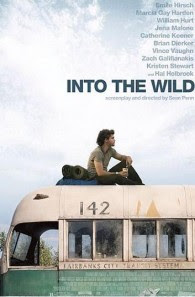
Movie poster for 'Into the Wild'

The other was Into the Wild, by Jon Krakauer. The recent interest was piqued when I was browsing a recent issue of Outside magazine, which was running a feature on the upcoming film adaptation of Krakauer's book. (Outside also run the original 1993 story Jon Krakauer wrote on Christopher McCandless for the magazine, available here)

Sean Penn wrote and directed the film. (The film is scheduled for a September release in the US.) There's some big names attached to the film: Vince Vaughn, William Hurt, Hal Holbrook and Catherine Keener.

I admit I was drawn to the romance of the subject. On September 1992, a decomposed body was found in an abandoned bus on a disused mining trail. The deceased had apparently died of starvation. He had no identification with him, and his journal chronicled a descent into sickness and slow death after 112 days alone in the wilderness.

When they finally identified the body, it revealed that he was Chris McCandless, a 24-year-old Honours graduate, star athlete, and beloved brother and son from a wealthy but dysfunctional East Coast family. He was something of a romantic, fond of Leo Tolstoy, Jack London and Thoreau. McCandless rechristened himself "Alexander Supertramp," cut all ties with his family, gave his trust fund to charity, and embarked on a two-year odyssey that brought him to Alaska, where he hoped to find his true self by renouncing society and living off the land. When he was found dead, his tale became something of a legend, an inspirational tale of an American solitary hero.

If you're interested in the film, here's the Into the Wild movie site

I was surfing the net earlier and via Worldhum, I came across a Men's Journal article by Matthew Power which doesn't quite buy into the romance of McCandless. Perhaps in our desire for a hero, some clever editing has been done to the real story.

From almost the moment he was found, the meaning of Chris McCandless's life and lonely death has been fiercely argued. The debate falls into two camps: Krakauer's visionary seeker, the tragic hero who dared to live the unmediated life he had dreamed of and died trying; or, as many Alaskans see it, the unprepared fool, a greenhorn who had fundamentally misjudged the wilderness he'd wanted so desperately to commune with. If the cult that has grown up around McCandless is any indication, we want the romantic portrait to be true: that he made a series of small mistakes that compounded in disaster. But the truth doesn't always conform to Hollywood's ideals.

Part of the argument against mythologizing McCandless was that the young man's death was essentially due to inadequate knowledge of living long-term in the wilderness and bad luck. As the native Alaskans know it: "the Alaska wilderness is a good place to test yourself. The Alaska wilderness is a bad place to find yourself." There were some who even suggested that McCandless might not have been in his right mind.

Powers also highlighted the difference between Sean Penn's film adaptation and Jon Krakauer's book:

But whereas Krakauer showed both sides of McCandless -- the hapless tenderfoot and the enlightened eternal seeker -- Penn presents only the latter version. His McCandless is almost Christlike. It is a deeply mythic take on a character who is largely a cipher. Clearly, in Sean Penn's eyes, Into the Wild is a story about something profound and universal in the human spirit, a longing for freedom and a pure connection to the natural world that's been lost.

There's obviously conflicting versions of the McCandless story in both book and film. From Matthew Powers' article, Sean Penn seems out to create a cult-hero, perhaps at the expense of objectivity. Or perhaps Penn just chooses to tell the story the way he read it. Each time a story is told, we add a bit of ourselves in the re-telling. One of the reasons I read travelogue is because it fulfills a yearning within myself. Like McCandless, and like Sean Penn, we look towards a wilderness that we believe calls out to us. It is real enough for us.

All these have not yet dampened my interest in the book or the film, but it does help remind me that non-fiction need not always be the truth, nor stories need to be true to be real. Meanwhile, I will see what meaning I can find from the pages of Into the Wild.

Friday, May 18, 2007

TRAVEL | Eye on the next destination

This conversation took place last night between my dad and myself:

DAD: Hey, are you interested in Laos?

ME: Yes. Why?

DAD: I did some research this morning on Laos.

ME: I have the Lonely Planet guide to Laos if you want.

DAD: How does November sound?

ME: Package tour or free and easy?

DAD: Backpacking.

ME: Oh yes!

DAD: How does November sound?

ME: This November?

DAD: Yes. This November.

Oh yes!

Sunday, May 13, 2007

BOOKS | This Cold Heaven

I'm in the middle of This Cold Heaven, a chronicle of a sort of Gretel Ehrlich's experiences in the Arctic. It is ironic, because while I absolutely abhor cold weathers, I find myself transported by tales of ice and cold.

This Cold Heaven is the kind of book that should be read somewhere warm and cozy, because the landscape Ehrlich writes about is chilling and brutal, yet resplendent in its stark beauty. There is a sense of much laughter and joy among the habitants of Arctic Greenland, but always there is the reminder of famine and starvation, of horrific deaths and even cannibalism. It's a difficult life, and one has to admire Ehrlich for her undertaking.

The reason Ehrlich came to her Arctic journey is also interesting. One day while she was near her Wyoming ranch, Gretel Ehrlich was literally struck by lightning. She survived the accident, and she wrote A Match to the Heart as a chronicle of that experience. It left her with a heart condition where she found it difficult to go to an altitude where she felt comfortable. So she went to Greenland, because she learned that treeline "can be a factor of latitude, not just altitude".

Greenland seems like an extraordinary place, with 95% of its surface just ice. Time seems unreal too, divided into 4 months of dark, 4 months of light, and 2 seasons of twilight ― "when the sun hangs at the horizon as though stuck between two thoughts."

Imagine watching the last sunset in October. The next time you see the sun again will be in February. That's how is it in the Arctic. Time is not measured by hours and seconds, and our biological clock is not programmed for the extended light and darkness.

The Greenlanders know of Perleroneq ― Arctic hysteria. It sometimes break out as the darkness came on and dogs as well as people might foam at the mouth and try to kill bystanders or themselves. Some reports that simply petting the dogs relieved them of their anxiety. How does one treat the afflicted humans though?

And so it is amazing that Gretel Ehrlich could spend 7 years (back and forth) on her Arctic peregrinations. While she traveled she also read the writings of other Arctic vagabonds and travelers. Among them is the Danish-Inuit explorer, Knud Rasmussen, who is something of a national hero. As she wrote: "Somewhere in my wanderings the present-day narrative spilt open to include his notes as well as my own." Rasmussen is the father of Eskimology, and his expedition notes led to a better understanding of the world of the Inuits unimaginable to us.

Ehrlich declares the Inuits (the world itself means "human being") the real heroes of Greenland. They were the first explorers and inhabitants, and they had the savvy and intelligence to adapt and thrive in the harsh climate.

The complexities of ice had taught the hunters to reconcile the imminence of famine and death with an irreverent joy at being alive. The landscape itself, with its shifting and melting ice, its mirages, glaciers, and drifting icebergs, is less a decription of desolation than an ode to the beauty of impermanence.

Beautiful, isn't it? The demands of survival meant fierce individualism is out of place among them. The group matters more. Inuit life works on a system of natural communalism. Ehrlich herself witnessed the generosity of such a life:

In Greenland I made it a practice to travel alone, never knowing quite how I would get from one place to another in a country of no roads, where solitude is thought to be a form of failure. I made my way alowly, with no common language and the usual Arctic weather-related delays, by dogsled, skiff, fishing boat, helicopter, and fixed-wing plane. The blessing of such awkward movements was that the locals took pity on me: I was passed from friend to friend, village to village, town to town, and slowly climbed the icy ladder up the west coast to Avannaarsua―the far north.

But the system of survival also has its flip-side. In time of famine, Darwinian rules of the fittest meant whoever was able to contribute to survival, not take from it. The group matters more. Rasmussen told the story of Miteq, a Inuit, who had encountered bad luck and his family was beginning to starve. Miteq and his wife sealed all but one of their children in a hut, and rolled a stone across the entrance. They then harnessed the dogs and drove away. But things did not improve and they soon were forced to abandon their final child. The couple soon made camp, but found that they could not live with themselves or other people, and they moved elsewhere. They eventually killed themselves.

There are plenty of these horror stories. Rasmussen collected their tales, and together they form a composition of a rich culture that lived with a constant awareness that death and starvation stood closely at behind, waiting.

But most of all, I am enthralled by the saying of a Caribou Eskimo, who once told Rasmussen:

All true wisdom is only to be found far from the dwellings of man, in the great solitudes; and it can only be attained through suffering. Suffering and privation are the only things that can open the mind of man to that which is hidden from his fellows.

Rasmussen took this to heart. I guess Gretel Erhlich did too, as she quoted this passage twice in the book.

One summer, on her way to an island 50 miles northwest of Uummannaq, the airline lost her luggage. With only the clothes on her back and her rucksack of books, she proceed anyway. She traveled several days from hot to cold climate, on planes, helicopters, benches and boats ― with nowhere to bathe, nothing to change into, and the clothes she was wearing souring. On the verge of sleep, she read something from the writings of artist Rockwell Kent:

See me liberated by the blessedness of the disaster from the confinement of the boat, shorn of property, stripped of clothes, wandering, an unknown alien-beachcomber in a generous land.

It is easy to go to places like Bali, Turkey or Italy these days and call it an adventure. It takes another kind of courage to throw yourself at the extreme edges of the world like the Arctic ― as Gretel Ehrlich did. I wondered at first if it was a kind of death-wish she had. She seems almost wilfully independent. At one point she was supposed to meet her interpreter, whose flight has been delayed and then was nowhere to be found. She loses her luggage, but she continues. In situations like hers, most people might have cancelled their trip, or waited. She went on ahead, a stranger in a brutal climate. (Later she was arrested, even suspected of being a Russian spy.)

There is an open fearlessness in her, though she appears unconscious of this characteristic of herself. Is it because things change when you survive a lightning strike? When you stand at the verge of death and return, the world becomes a little less scary? I wonder. Perhaps I would like to believe so. Ehrlich's peregrinations remind me of the wanderings of Zen monks through the ages, though I suspect none of them went so far to the Arctic North. She is remarkable, though quietly so.

Further Information: Gretel Ehrlich is currently travelling with the year-long Ukiivik Expedition, sponsored by the National Geographic Expeditions Council. They will travel across Arctic Alaska, Nunavut, Greenland, Sapmi (Lapland), as well as western and eastern Siberia. A book, Farthest North: The End of Ice, is supposed to be published by National Geographic. Their progress is also supposed to be updated at: http://www.point-hope.com/ ― but there hasn't been any updates since February 2007.