Wednesday, October 11, 2006

Looming Bookshelves of Death Part 2

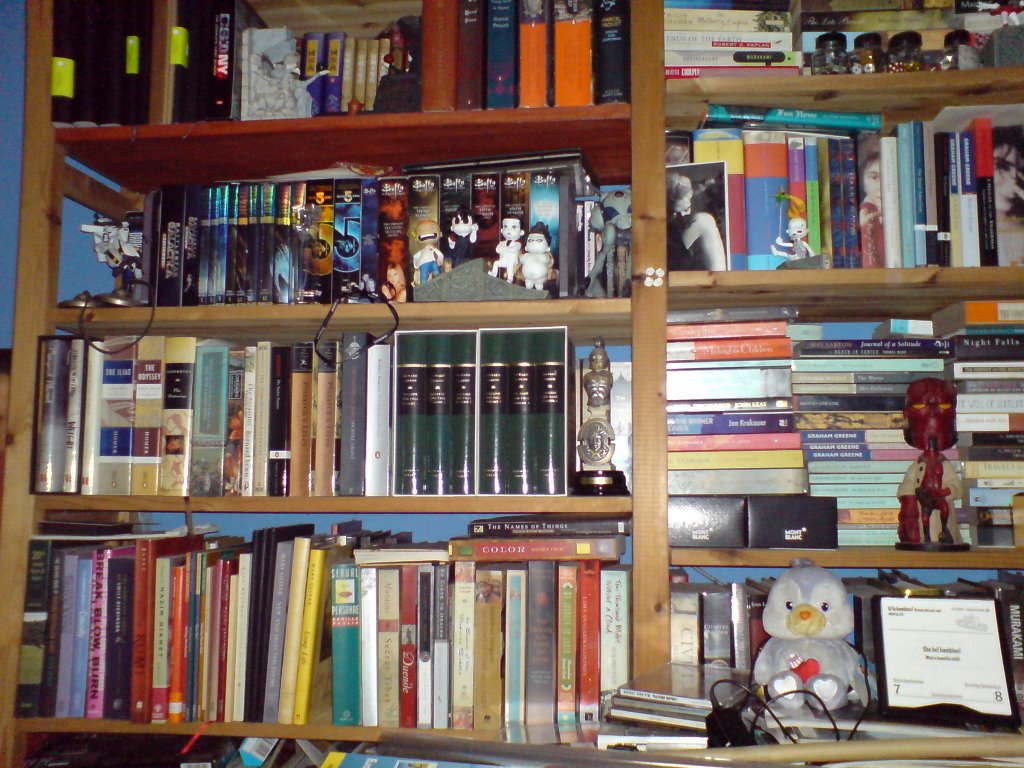
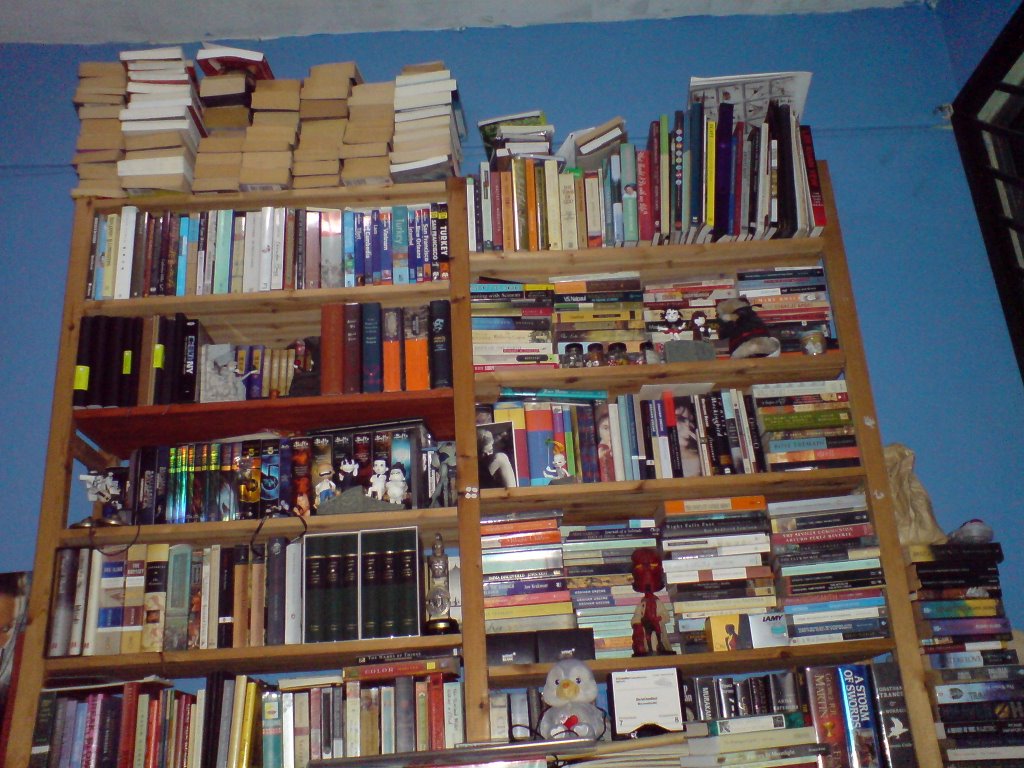
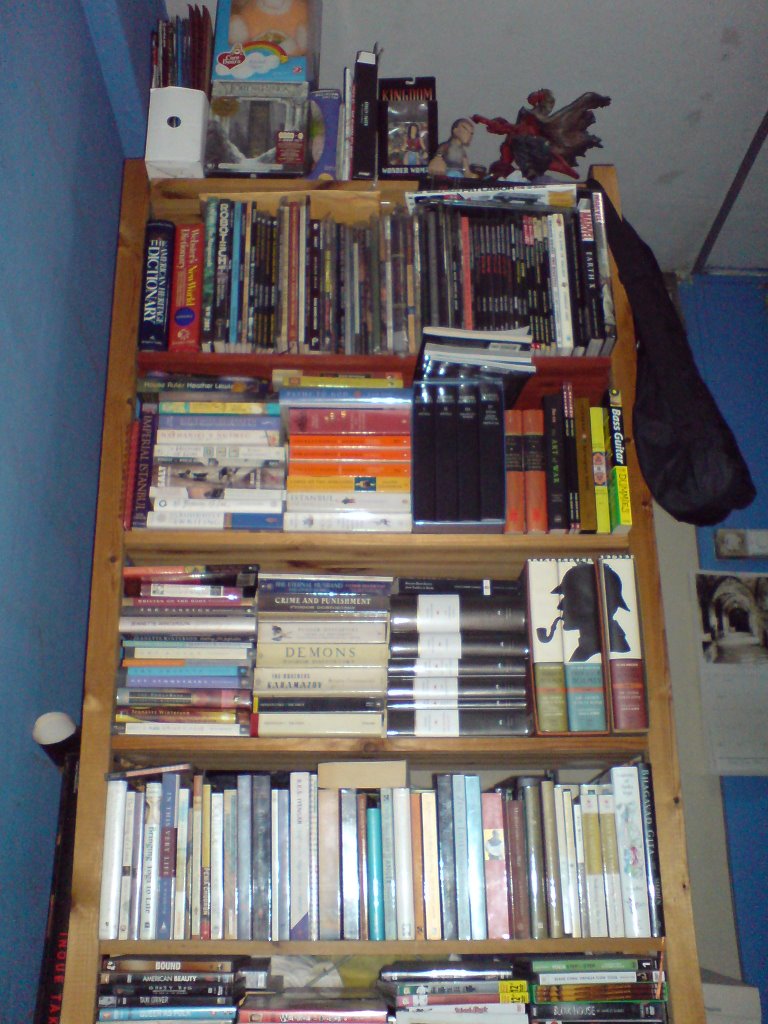
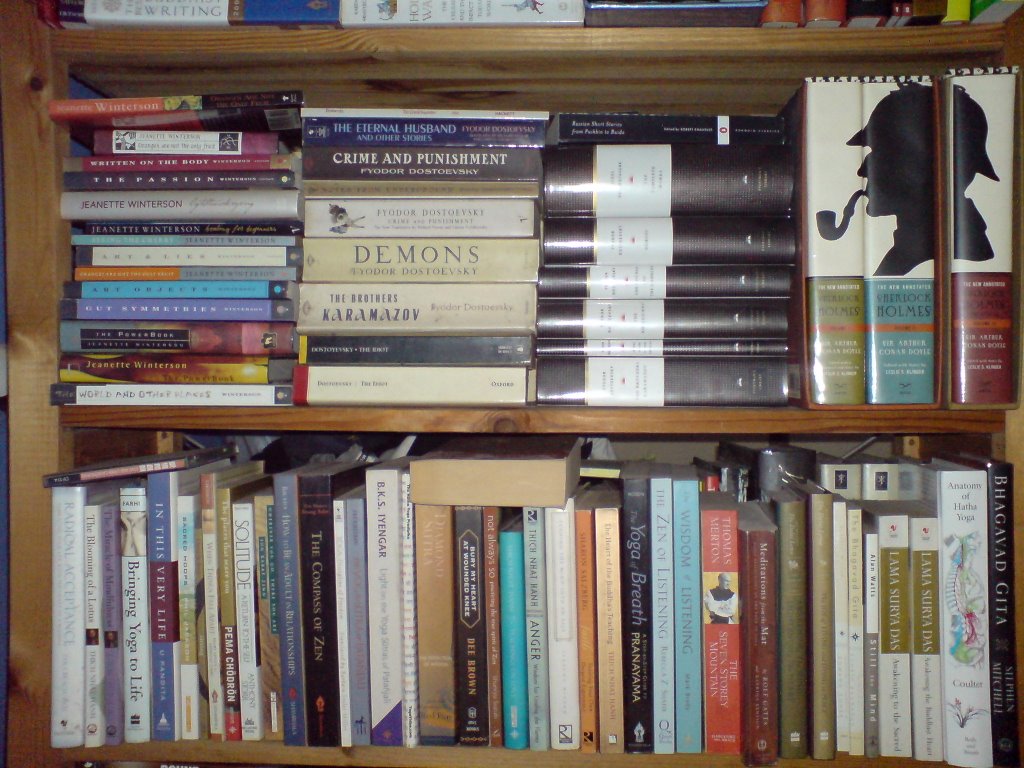
This is the bookshelf that sits facing my bed. It's the one with my favourite authors, as well as books on yoga and related subjects. It's also the bookshelf most likely to crush me to death in case of an earthquake.

[Picture 1 Above: A fuller view of the bookshelf. The long, black thing hanging off the top right hand corner is a yoga bag.]

[Picture 2 Above: Lower rows. Bottom row are the yoga, meditation and spirituality titles. Top row are the Jeanette Winterson titles, Dostoevsky in paperbacks and the Everyman hardcovers. And of course, Sherlock Holmes]

[Picture 3 Above: On the top row are mainly my graphic novels; The Sandman, Hellboy, Strangers in Paradise. Bottom row - standing upright are the collected works of Samuel Beckett, next to the Everyman editions of R. K. Narayan on the right]

That's it for bookshelves. I'll try to find something else to shoot with my camera phone.

BOOKS | What I'm Reading Now

Yes, I'm still playing with my camera phone. These are the books I'm in the midst of reading. The black book with the fountain pen is my journal.

Poetry | Foreign

I've came across discussions about reading poetry recently, and I find myself thinking about my own relationship with poetry. I admit I don't read a lot of poetry, even in school (I always preferred a good story.) As an English Lit major I had to read the important poets: John Donne, William Blake, W. H. Auden, Sylvia Plath and T.S. Eliot to name a few. But really, we read them because we had to; not everybody will come to loves Sylvia Plath (While I appreciate her works, I personally prefer Ted Hughes' earlier works- especially the shamanistic The Crow). Classroom poetry rarely made enough of an impact on our lives for us to carry them with us beyond school.

The irony then, that I discovered the poets I love after graduation.

I'm trying to recall the very first time I really responded to a poem on a deep, personal level. I guess it had to be Carol Ann Duffy.

We were using the anthology 20th Century Poetry & Poetics (edited by Gary Geddes) as a text for a third year module on 20th Century Literature. Carol Ann Duffy was not covered in the during class but some of her poems were in the anthology. I am of the disposition where the only time I do anything with interest is when I don't have to. So naturally, I read the poetry that are not included in the exams. I read Carol Ann Duffy's Foreign.

I cannot understand why this poem touched me. This is not about my situation in life. I should not be able to identify with the poem, but it moves me deeply. It is about me. Is it the universal theme of alien-ness within a cityscape that speaks to me, I asked myself - but this is the conditioned response of an English Lit student. In schools we were taught to approach a poem analytically. Look at rhythm, rhyme, structure, themes and motifs. What does it says? What does it mean? Suddenly, I stumble across a poem that hit me square in the chest. And I am less concern with what it say - but rather, how it makes me feel.

How it makes me feel is that I feel like the man who speaks but his words cannot translate. I try, but I do not understand the strangeness of the world I live in. And sometimes I feel that the world is unreal.

... and now you do not know
why your eyes are watering and what's the word for this.


Foreign
By Carol Ann Duffy


Imagine living in a strange, dark city for twenty years.
There are some dismal dwellings on the east side
and one of them is yours. On the landing, you hear
your foreign accent echo down the stairs. You think
in a language of your own and talk in theirs.

Then you are writing home. The voice in your head
recites the letter in a local dialect; behind that
is the sound of your mother singing to you,
all that time ago, and now you do not know
why your eyes are watering and what's the word for this.

You use the public transport. Work. Sleep. Imagine one night
you saw a name for yourself sprayed in red
against a brick wall. A hate name. Red like blood.
It is snowing on the streets, under the neon lights,
as if this place were coming to bits before your eyes.

And in the delicatessen, from time to time, the coins
in your palm will not translate. Inarticulate,
because this is not home, you point at fruit. Imagine
that one of you says Me not know what these people mean.
It like they only go to bed and dream.
Imagine that.


PS: To be fair, I should mention that whenever Christmas preparations start to drive me crazy, I make it a point to re-read T.S. Eliot's Journey of the Magi. I find that it helps keep the holiday in perspective. Perhaps something from classroom poetry did make a profound impression.

Monday, October 09, 2006

My Bookshelves

Bought a new camera phone, so I was trying out the camera function. A glimpse at my bookshelves in a gradual 3 parts view from the floor upwards. (Click on the picture for a larger view)


[Picture 1 Above] These are the stacks on the floor. No more shelf-space. The penguin is one of the Carebear Cousins. In the background you can see the bookshelves. My poetry collection (small collection) on the left, the hardcovers on the right.


[Picture 2 Above] Mid-rows of the bookshelves. Besides books, there are the Little Endless figurines, Robotech bookends, Sandman bookends. Next to the little Greek armour statue is Gibbons' Decline and Fall of the Roman Empire and other works on ancient history and mythology (such as Homer, Plutarch, Herodotus and Suetonius).


[Picture 3 Above] Is it just me or is there a "looming bookshelves of death" feel to this picture?

PROUST | Elstir and the Follies of Youth

An excuse to reference Proust, because all things are connected, and everything comes full circle.

In the Shadow of Young Girls in Flower, the narrator finally meets the artist Elstir in Balbec. And Elstir, with regards to himself, offers the narrator some advice that would hopefully benefit the young man:

"There is no such thing," he said, "as a man, however clever he may be, who has never at some time in his youth uttered words, or even led a life, that he would not prefer to see expunged from memory. He should not find this absolutely a matter for regret, as he cannot be sure he would ever have become as wise as he is, if indeed getting wisdom is a possiblility for any of us, had he not traversed all the silly or detestable incarnations that are bound to precede that final one. I know there are young men, sons and grandsons of distinguised men, whose tutors, since their earliest high-school years, have taught them every nobility of soul and excellent precept of morality. The lives of such men may contain nothing they would wish to abolish; they may be happy to endorse every word they have ever uttered. But they are the poor in spirit, the effete descendants of doctrinarians, whose only wisdoms are negative and sterile. Wisdom cannot be inherited―one must discover it for oneself, but only after following a course that no one can follow in our stead; no one can spare us that experience, for wisdom is only a point of view on things. The lives of men you admire, attitudes you think are noble, haven't been laid down by their fathers or tutors―they were preceded by very different beginnings, and were influenced by whatever surrounded them, whther it was good, bad, or indifferent. Each of them is the outcome of a struggle, each of them is a victory..."

Respect Everything

The ego has a way of tricking us. We think we have matured, evolved to become a better person. Then something happens and we realise: Nope, still same old me. Still have miles to go. I'm still the same person making the same mistakes. And yet - I understand a little bit more now than I did.

I was thinking of something, so I went and dug out an old issue of Shambhala Sun.

There was a piece I recall a long time ago that stuck with me:


Te-shan asked the old tea-cake woman, "Who is your teacher? Where did you learn this?"

She pointed to a monastery a half mile away.

Te-shan visited Lung-t'an and questioned him far into the night. Finally when it was very late, Lung-t'an said, "Why Don't you go and rest now?"

Te-shan thanked him and opened the door. "It's dark outside. I can't see."

Lung-t'an lit a candle for him, but just as Te-shan turned and reached out to take it, Lung-t'an blew it put.

At that moment Te-shan had a great enlightenment. Full of gratitude, he bowed deeply to Lung-t'an.

The next day Lung-t'an praised Te-shan to the assmbly of monks. Te-shan brought his books and commentaries in front of the building and lit them on fire, saying, "These notes are nothing, like placing a hair in vast space."

Then bowing again to his teacher, he left.

Natalie Goldberg elaborated on this parable:

But, oddly enough, Te-shan only had that one meeting with Lung-t'an, and he woke up. Of course, he was a serious scholar of the dharma for a long time. Who is to say scholarly pursuits―studying books intently and writing commentary―don't prepare the mind as well as sweeping bamboo-lined walk-ways, sitting long hours, or preparing monastery meals?

Zen training is physical. But what isn't physical while we have a body on this earth? Sitting bent over books, our eyes following a line of print, is physical too. So that when Te-shan had that single evening in Lung-t'an's room, he was already very ripe. Lung-t'an merely had to push him off the tree, and Te-shan was prepared to fall into the tremendous empty dark with no clinging.

Te-shan was shown true darkness when Lung-t'an blew out the light; he held at last a dharma candle to guide his way, but he still had a lot of maturation ahead of him. Don't forget the next morning he made that grandiose gesture of burning his books in front of the assembly of monks. He was still acting out, choosing this and leaving that. He was not yet able to honor his whole journey, to respect everything that brought him to this moment. Te-shan still envisioned things in dualistic terms: now only direct insight mattered; books needed to be destroyed. He didn't see that all those years of study had created a foundation that supported his awakening with Lung-t'an. Originally he traveled from the north with his sutras on his back to enlighten the southern barbarians. Here he was doing a complete reversal, torching his past and revering his present experience. Someday he would embrace the north and the south, unify all of China in his heart, and attain a peaceful mind. But he was not there yet. We see him engaged in drama, presenting a flaming pageant in front of the other monks.

His life has not yet settled and become calm....

How can anyone survive if the way is so splintered? What we learn is it's all whole, been whole all along. It is our perception that is broken and that creates a shattered world. But each of us has to discover this in our own lives. That is what is so sad.


The excerpt is taken from, "When the Candle Is Blown Out," written by Natalie Goldberg, Shambhala Sun, September 2004 issue. There is a lot more in the article, but it is this particular parable of Te-shan and the burning of the books that I always come to. Like Te-shan in a way, I'd believe I need to burn away my past to move on. Yet time and time again, I am reminded that I am the sum of all my experiences, pleasant or otherwise. To deny any bit of my experience is to deny the whole of myself.

Ms F and I were talking one day. The question came up: "If you could go back in time, what would you change?"

Of course, as Ms F pointed out, it's a trick question. You can only learn from your mistakes after having made them. Without the mistakes you would not want to change anything. A paradox of life - that we need the mistakes and the regrets for change. That our screw-ups can lead to a realisation of something better. We just need to be ready to see.

Another time, another place. After yet another screw-up with her no-good boyfriend, Ms C asked me, "If you were in my place, what would you have done?"

Once again: trick question; if I was in her place, I would not have made the choices that led to her regrets and heartbreaks. Similarly, Ms C would not have made my mistakes; she would have chosen differently.

This is the burden of Free Will. We are no better that anyone else; We just make our own mistakes, each one on our own path. As Goldberg wrote, "But each of us has to discover this in our own lives. That is what is so sad."

This is what is so sad.

Even now, when I see my friends about to make similar mistakes, I try to warn them. I have been there, I tell them. It has costed me much suffering. Do not go there. Here we are - trying to change our past through another. But we never listen. What did I expect? That was how it was for me: advice fell on deaf ears, how I would not listen until I was ready to hear. Finally, it was the tremendous regrets that made me hear.

As the mud nourishes the lotus, yet not cling to the lotus. Respect everything that brought us to to this moment. I have to keep reminding myself of this.
Tuesday, October 03, 2006

Elegance, Audrey Hepburn Style

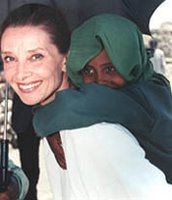
Photo Source: UNICEF/HQ88-0184/John IsaacSome background to this photo: In 1988 in Ethiopia, shaded from the sun by an umbrella, UNICEF Ambassdor Audrey Hepburn carries a girl while reviewing a UNICEF-assisted food supply project in the northern Amhara region of the country.

There was an exhibition for the works of photographer John Isaac, a few months back. Among the works on display were the UNICEF photos of Audrey Hepburn.

John Isaac had a close collaboration with Audrey Hepburn when she was special UN Ambassador for UNICEF: she said that his 1992 portrait of her surrounded by children in Somalia was her all-time favourite. (I can't be certain which photo specifically, so I put up one from John Isaac that I liked.)

When American Photo ran an issue on celebrity photography, they asked Isaac to ask Hepburn if they could airbrush her facial wrinkles.

Audrey Hepburn's replied, "Johnny, tell them not to mess with that picture. I’ve earned every one of those wrinkles."

That made an impression on me. Elegance, Audrey Hepburn style.

Bulgakov and Bakhtin

I finally finished re-reading Mikhail Bulgakov's The Master and Margarita last night. Translators do matter. It seems odd, to re-read the book, and feel like I'm reading it for the first time.

Bulgakov wrote around the same time as Mikhail Bakhtin, a Russian literary theorist. Both writers formulated their philosophy during the Stalin regime. Specifically, Bulgakov's novel made me think in the line of Bakhtin's idea of the carnivalesque. The carnivalesque serves as a strategy for destabilising the status quo which has become rigid and oppressive. It comes from the tension between that which is permitted and that which is forbidden, and is of particular significance to writers under a totalitarianism society.

In The Master and Margarita, Satan visits Moscow and causes much chaos. No one can stop him, because no one believes Satan exists in an atheist Socialist Russia. Society is unarmed by its own rigid worldview.

Will write more. I need to re-read Bahktin.

P/S: I've finally received my order of Colette's Earthly Paradise. It's out of print, but thank you for Abebooks.

Jan Morris

Jan Morris celebrates her 80th birthday on 2nd October, 2006.

The Guardian pays tribute to this extraordinary writer.

You can also check out:
1. The Guardian's Quick Guide to Jan Morris
2. Lonely Planet interview
3. Salon.com's Book Bag

Monday, October 02, 2006

OLIVER | Thirst

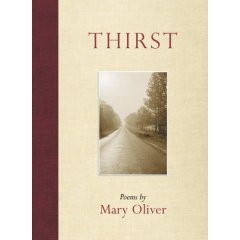
Thirst by Mary Oliver

Just bought my copy of Mary Oliver's new poetry collection, Thirst.

The beauty about working in a bookstore is that you can always just walk up to the warehouse people and politely ask - "Are my books in?" If they like you, they will usually tear the cartons to get you the books. Otherwise, you wait - like everyone else. Hee.

I'm reading the collection tonight. Will definitely share any poems that inspires me.

Shteyngart on a Russian Slacker

From The New York Times, Gary Shteyngart writes "the most insightful essay ever written on the subject — a short, funny, but oddly moving meditation" on Ivan Goncharov's Oblomov. It's funny.

Read it here.

Friday, September 29, 2006

FEER Ban

Singapore authority has banned the Far Eastern Economic Review magazine. Somehow, this news depresses me.
In its press release, the government added that it was now also an offense to import or possess copies of the Hong Kong-based magazine, known by its initials FEER, for sale or distribution in the city-state.

Full write-up here.

From "Traveling Light"

The Perils of 'Going Native' by Rolf Potts
In The Songlines, Bruce Chatwin observes that nomadic animal species tend to be less dependent upon hierarchies and shows of dominance, since the hardships of the journey naturally weed out the weak. Now that nomadic life rarely involves natural selection, however, travel culture seems to have utilized fashion (among other things) as a subtle kind of litmus test. Ostensibly, a Shan jacket worn with a Mao hat and cotton pyjama bottoms implies that you had the Darwinian oomph to survive northern Burma, communist China, and the Punjab. (Wearing a fanny pack over a lungi, on the other hand, implies that you have yet to prove your evolutionary jam.)


Full article.

New Look

I got bored with the old layout. But now it's getting more complicated. Will see how I feel about this page.

Thursday, September 28, 2006

Penguin Classics Reading Group Reads

I'm not getting paid for this, but from Penguin Books with Amazon.com:
Penguin proudly announces the launch of the Penguin Classics Reading Group @ Amazon.com, a hosted forum to promote lively conversation about selected classics throughout the year. Our discussion of each title will continue for about six weeks, and selections will run the gamut from well-known favorites to cult classics representing writers from across the centuries and all regions of the globe. Please join us as we read great books together!

The Penguin Classics Reading Group will kick off with Robertson Davies' The Fifth Business.

Discussion will be faciliated by Kathryn Gursky, a librarian who had her 3 minutes of fame when her husband bought her the Penguin Classics Complete Collection to replace her personal library of some 2,300 books lost in a fire (Good husband!).

Go to Penguin Classics Reading Group

Bourdian Goes To Singapore

From The New York Times of all places, Anthony Bourdian eats in Singapore.

Monday, September 25, 2006

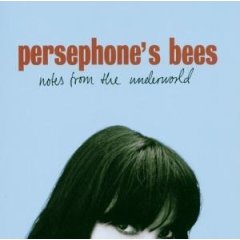
MUSIC | Notes from the Underworld

Notes from the Underworld
Currently Playing: Persephone's Bees: "Notes from the Underworld"

Been playing this album non-stop. It's catchy, in an upbeat, retro-dance-pop savvy kind of way. I can feel my feet and hips moving to the rhythm every time.

My favourite track: "Muzika Dyla Fil'ma," which is performed in Russian by lead singer, Angelina Moysov (who is apparently of Russian descent). Great vocals - she has a breezy, sultry voice that carries the songs confidently.

Thursday, September 21, 2006

Books I Would Like To Read But ...

Are Still In Expensive Hardcovers ...

#1. The Ruby In her Navel by Barry Unsworth
Not shortlisted for the Man Booker Prize, but still looks interesting. Love, and some of it involving a sensuous court dancer - all these taking place at the Sicilian court of King Roger in Palermo.

#2. The Three Musketeers by Alexandre Dumas; translation by Richard Pevear
Always wanted to re-read this classic, with the villainous Milady. And it's a Richard Pevear translation.

#3. Just Kids by Patti Smith
Patti Smith describes her relationship with Robert Mapplethorpe, from their first meeting in the early 1970s through their shared artistic ambitions. Just because I am a Patti Smith fan.

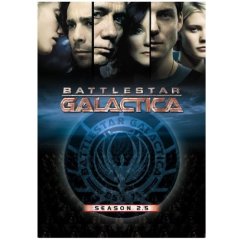
BSG 2.5

Battlestar Galactica
My Amazon order for Battlestar Galactica Season 2.5 has shipped!

Excitement!

Wednesday, September 20, 2006

Wedding Invitation

Came back last night from yoga class and I found the square envelope on top of my laptop. I recognise the roundish handwriting. So, the wedding invitation has arrived.

Some time back, I was at work. There was an old calculator lying around. I picked it up. There was a sticker on the back, with "Unit One" written in a familiar handwriting. It was a distinctive script. Roundish, like something written by the hand of a child. And for a very brief moment there was a tinge of nostalgic heartache.

Has it really been six years?

Of all the people that came and left - it is amazing that you are still my friend.

And now, your wedding.

In case I have to - in case you don't already know I wouldn't miss it unless I'm dead or in a coma:

RSVP - YES. I AM ATTENDING YOUR WEDDING.

Tuesday, September 19, 2006

A Year of Russian Masters

I've just started on the third volume of The Proustian Epic, The Guermantes Way. But barely 20 pages into the book I found myself picking up Mikhail Bulgakov's The Master And Margarita. I first picked up Bulgakov in the university library six year ago. Now, re-reading the Richard Pevear/Larissa Volokhonsky translation, it feels like a new book. The carnivalesque energy is simulating.

If there is a theme to my 100 Books To Read List this year, it's probably a Russian inclination. There is something about the Russian masters that fascinated me - their tragedy, their passions, their despair and their faith. I thought this year will be a good year to finally acquaint myself further with the Russian masters.

I've picked up Dostoevsky's The Idiot twice - but never finished it. Nastasya Filipovna is one of the most compelling femme fatale I've ever encountered in literature. Perhaps, I tell myself, perhaps this year I'll finish The Idiot.

I've not read War and Peace, or Anna Karenina. I loved the short stories of Nikolai Gogol - and desire to read Dead Souls. And Chekhov, the master of human tragedy.

Monday, September 18, 2006

OLIVER | Beans

Beans
By Mary Oliver

They're not like peaches or squash.
Plumpness isn't for them. They like
being lean, as if for the narrow
path. The beans themselves sit qui-
etly inside their green pods. In-
stinctively one picks with care,
never tearing down the fine vine,
never not noticing their crisp bod-
ies, or feeling their willingness for
the pot, for the fire.

I have thought sometimes that
something―I can't name it―
watches as I walk the rows, accept
ing the gift of their lives to assist
mine.

I know what you think: this is fool-
ishness. They're only vegetables.
Even the blossoms with which they
begin are small and pale, hardly sig-
nificant. Our hands, or minds, our
feet hold more intelligence. With
this I have no quarrel.

But, what about virtue?

Saturday, September 16, 2006

De Charlus By Fashion

Montesquiou

I saw that he had changed his clothes: the suit he now wore was even darker than the other one – no doubt true elegance is closer to simplicity than is false elegance, but there was something else about him: at close range, one sensed that the almost complete absence of color from his clothes came not from any indifference to color, but because, for some reason, he deprived himself of it. The sobriety apparent in his clothing gave the impression of deriving from a self-imposed diet, rather than from any lack of appetite. In the fabric of his trousers, a fine stripe of dark green harmonized with a line visible in his socks, the refinement of this touch revealing the intensity of a preference which, though suppressed everywhere else, had been tolerated in that one form as a special concession, whereas a red design in the cravat remained as imperceptible as a liberty not quite taken, a temptation not quite succumbed to.

~ from In the Shadow of Young Girls In Flowers

PROUST | Baron de Charlus

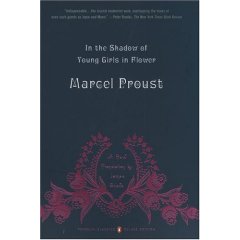
In The Shadow of Young Girls In Flowers

Still reading In the Shadow of Young Girls in Flower.

The narrator is still at Balbec with his grandmother. Saint-Loupe has made his appearance.

And I have finally been introduced to the larger than life Baron de Charlus.

Much have been written about de Charlus - one of Proust's most memorable creations, according to various critics and biographers. I have formed an impression of an aristocratic monomaniac, with an ego as consuming and glorious as the Sun, and everyone else just satellite around him.

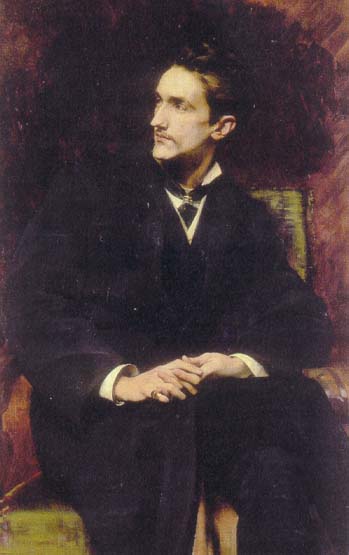
De Charlus is said to be loosely based on Robert de Montesquiou, French Symbolist poet and art collector – and all around snob.

Proust seemed to have fawned on Montesquiou, and it seemed like a calculated relationship for the writer. "Proust was impressed by Montesquiou's combination of reverence for the arts and extraordinary social connections; the young man shared the first and coveted the second," wrote Edmund White.

In fact, White has quite a few things to say about Robert de Montesquiou:


In 1893 Proust met Robert de Montesquiou at the house of the hostess-painter Madeleine Lemarie … Montesquiou – a monster of egotism who needed constant praise as exaggerated as that which Nero had required, and who could be as sadistic as the Roman emperor if it was not forthcoming – was thirty-seven when Proust, just twenty-two years old, met him. In 1909 he gave a hint of his pretensions when he answered a questionnaire (“Who are you?”) by saying: “Related to a large part of the European aristocracy. Ancestors: Field-Marshals: Blaise de Montluc, Jean de Gassion, Pierre de Montesquiou, Anne-Piere de Montesquiou, the conqueror of Savoy, d’Artagnan (the hero of The Three Musketeers), the abbot de Montesquiou, Louis XVIII’s minister, the General Count A. de Montesquiou, Napoleon’s aide-de-camp.” Proust admired his dandy with his leanness (“I look like a greyhound in a greatcoat,” he said of himself), his fabled friendships with legendary poets such as Verlaine and Mallarme, and his cult of the beautiful conducted in his extravagant house, the Rose Pavilion…

Montesquiou was a grand seigneur, distinguished by such overweening pride that a society painter was once overheard saying about him, “There’s one good thing about the French Revolution. If it hadn’t happened, that man would have us beating his ponds to keep the frogs quiet.”

In his high-pitched, grating voice Montesquiou was constantly recited his own poetry from volumes with names like Hydrangeas, The Bats, and The Red Beads, or presiding over literary and musical soirees. No praise was too extravagant, and Proust knew how to lay it on thick. "You are the sovereign not only of transitory, but of eternal things," Proust wrote him. On another occasion Proust (ridiculously) compared him to the seventeenth-century playwright Corneille, the father of Frrench classical theater. But Proust was also the master of the nuanced compliments; after Montesquiou showed him his celebrated Japanese dwarf trees, Proust had the nerve to write him that his soul was "a garden as rare and fastiduous as the one in which you allowed me to walk the other day ..." And Montesquiou heard that Proust kept his friends in stitches imitating his way of speaking, of lauging, and of stamping his foot. Most daring of all, Proust proposed to write an essay to be titled "The Simplicity of Monsieur Montesquiou," who had never been previously accused of such a quality.

~ pp 59-60 from Marcel Proust: A Penguin Life

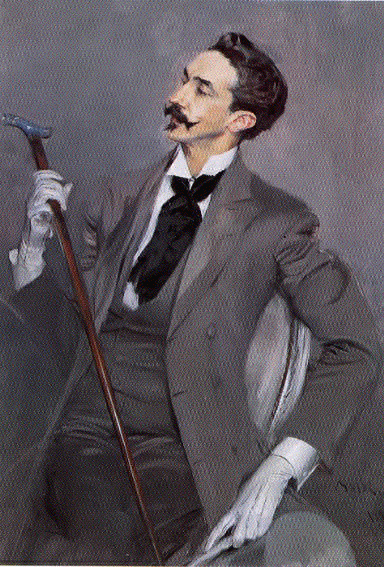
Portrait of Robert de Montesquiou, the inspiration for Proust's Baron de Charlus

<--- Portrait of a Snob

Friday, September 15, 2006

Footballers Are Children Too

Too funny not to post:
In Frank Lampard's book, for example, the long-suffering Chelsea dynamo tells us that during the 2004 European Championship the staff took the players out to McDonald's for a bit of a treat. Not much more is revealed, but those who witnessed the scene claim that there were a few tantrums when it emerged that the toy in David Beckham's Happy Meal was one of the surfer dude turtles from Finding Nemo, while the rest of the squad had to make do with a model of that camp Hispanic crab from Little Mermaid II.


Full story here.

Pope Benedict Shoots His Mouth Off

Somebody should just shut-up. And I'm not talking about Bush.

Another good reason why I choose to be irreligious.

Books Unread

I look at the books unread on my list. I am attempting to reconcile myself to the fact I probably will have to go to my grave with Moby Dick unread.

Man Booker Shortlist 2006

Desai, Kiran The Inheritance of Loss - Hamish Hamilton
Grenville, Kate The Secret River - Canongate
Hyland, M.J. Carry Me Down - Canongate
Matar, Hisham In the Country of Men - Viking
St Aubyn, Edward Mother’s Milk - Picador
Waters, Sarah The Night Watch - Virago

My bet is on Sarah Waters, but that's probably because it's the only book on the list I've read.

Thursday, September 14, 2006

Your Life In Boxes

Ms F is leaving for her studies at East Anglia next week. She messaged me this:
It's kinda surreal seeing your life summarised in 2 big boxes.
Only 1 year, girl. Unless they are on strike at East Anglia, then it'll probably be a little longer.

Stingray Mutilations

It seems Steve Irwin fans are on a stingray rampage to avenge the man:
Mr Irwin, a TV personality known as the "Crocodile Hunter", was killed while diving in Queensland when a stingray's barb stabbed him in the chest.

Since then, 10 stingrays have been found mutilated on Queensland beaches.

What a damn waste. You guys could have BBQ-ed the stingrays with lots of sambal chilli.

In honour of Steve Irwin, I propose that all fans go forth and eat a BBQ stingray.

Skeletal Art of Cartoon Characters

An artist has decided to render in art the skeletal system of cartoon characters like Charlie Brown and the Power Puff Girls. It should disturb me, but it doesn't. It's quite cute, actually.
I decided to take a select few of these popular characters and render their skeletal systems as I imagine they might resemble if one truly had eye sockets half the size of its head, or fingerless-hands, or feet comprising 60% of its body mass.
See here.

Link via Bookslut.

Wednesday, September 13, 2006

Matthiessen and Turgenev

I found this in an article on Peter Matthiessen:
"There's a line in Turgenev," he says, "That absolutely haunts me. It's a suicide note, and the entire note is, 'I could not simplify myself.' What an arrow through the heart!"

Tuesday, September 12, 2006

Rereading To Kill A Mockingbird

I re-read To Kill A Mockingbird this year. We outgrow childhood books, but there are the special ones that we can never shake off because it was pivotal in shaping the adult you become.

Like Jeanette Winterson, I am uncomfortable with someone who has no books in their homes – because then the person becomes a blank slate to me.

But more than the books you read, what you focus on in a book reveals something about you.

This is one of my favourite parts of To Kill A Mockingbird. I still find it stirring when I read it earlier this year. This is after the "guilty" verdict has been passed on Tom Robinson. Atticus about to leave the courtroom.

Judge Taylor was saying something. His gravel was in his fist, but he wasn’t using it. Dimly, I saw Atticus pushing papers from the table into his briefcase. He snapped it shut, went to the court reporter and said something, nodded to Mr Gilmer, and then went to Tom Robinson and whispered something to him. Atticus put his head on Tom’s shoulder as he whispered. Atticus took his coat off the back of his chair and pulled it over his shoulder. Then he left the courtroom, but not by his usual exit. He must have wanted to go home the short way, because he walked quickly down the middle aisle toward the south exit. I followed the top of his head as he made his way to the door. He did not look up.

Someone was punching me, but I was reluctant to take my eyes from the people below us, and from the image of Atticus’s lonely walk down the aisle.

"Miss Jean Louise?"

I looked around. They were standing. All around us and in the balcony on the people wall, the Negroes were getting to their feet. Reverend Sykes’s voice was as distant as Judge Taylor’s:

"Miss Jean Louise, stand up. Your father’s passin’."

I have always believed this scene is an affirmation. I was looking through my journal, and to this scene, I wrote:

It alway seems silly to cry at this point. But it’s redemptive, almost, this scene. As though it’s never a complete defeat. That in some little way, fighting to the end is its own victory.

With hindsight, I realise that for me, it is not enough to do what is right, just for the sake of doing the right thing. I want the accolades for my struggles.

Like Atticus, I want to be someone who will stand up for a Tom Robinson even if the world tells me not to. But - I want people to stand when I leave the courtroom.

For all the admiration I have of the character, I am not Atticus.

One is about someone else, the other - is about me.

I am still sorely human. And that - is something to think about.

My entry for 15th March 2006, just after I finished reading To Kill A Mockingbird:

Reread the book you loved from childhood, and remember why you loved it then, and why you cry.

That you still can cry at the parts that used to break your heart – maybe you have not lost as much as you supposed. Maybe the years haven’t hardened you so much. Maybe your experience had not caught up with your instincts.


I wonder. Maybe a part of me has not yet changed.

POETRY | Walking Home from Oak-Head

I was browsing through my September/October 2006 issue of Utne magazine. They have included a Mary Oliver poem from her latest collection, Thirst. The collection is due out this October, published by Beacon Press.

I adore Mary Oliver’s writings. I look to her poetry and essays for that breath of fresh air.


Walking Home from Oak-Head


by Mary Oliver


There is something
    about the snow-laden sky
        in the winter
            in the late afternoon

that brings to the heart elation
    and the lovely meaninglessness
        of time.
            Whenever I get home - whenever -

somebody loves me there.
    Meanwhile
       I stand in the same dark peace
            as any pine tree,

or wander on slowly
    like the still unhurried wind,
        waiting,
            as for a gift,

for the snow to begin
    which it does
        as first casually,
            then, irrepressibly.

Wherever else I live -
    in music, in words
        in the fires of the heart,
            I abide just as deeply

in this nameless, indivisible place,
    this world,
        which is falling apart now,
            which is white and wild,

Which is faithful beyond all our expressions of faith,
    our deepest prayers.
        Don't worry, sooner or later I'll be home.
            Red-cheeked from the roused wind,

I'll stand in the doorway
    stamping my boots and slapping my hands,
        my shoulders
            covered with stars.

Monday, September 11, 2006

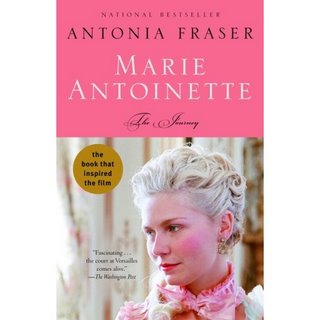
Marie Antoinette Film Tie-In Cover

So Pink!OMG! So PINK!

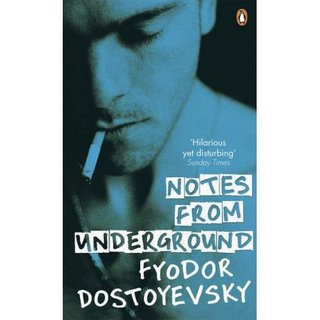
PENGUIN RED CLASSICS: Notes from Underground

Notes from UndergroundHere's the new jacket treatment for the awful Penguin red Classics. Okay, I would not buy this version, but something about the handsome young man with the dangling cigarette makes me want this as a poster in my room.

Edmund White on Proust

Our friendly local library has only one copy of Edmund White's Marcel Proust, and it's categorized under "Reference Only."

What this means is: for the past few weeks, I've been making weekend trips to the library just to read this book.

Gleanings from Edmund White, his take on why we read Proust:

Proust may have attacked love, but he did know a lot about it. Like us, he took nothing for granted. He was not on smug, cozy terms with his own experience. We read Proust because he knows so much about the links between childhood anguish and adult passion. We read Proust because, despite his intelligence, he holds reasoned evaluations in contempt and knows that only the gnarled knowledge that suffering brings us is of any real use. We read Proust because he knows that in the terminal stage of passion we no longer love the beloved; the object of our love has been overshadowed by love itself.

Edmund White has also praised Jean-Yves Tadié's biography of Proust as one of the best on the subject. It is awfully thick, and of course, the genius at our friendly local library has categorized it under "Reference Only."

*sigh*

SALON Goes Norway

Salon's the Literary Guide to the World goes Norway.

William T. Vollmann selects:

1. The Poetic Edda by Lee M. Hollander
2. Kristin Lavransdatter by Sigrid Undset
3. The Master of Hestviken by Sigrid Undset

Coincidentally, I've scheduled Kristin Lavransdatter for next year's 100 Books To Read. JN gave some positive feedback about it, but I'll probably speak to her about it later - AFTER I've actually read the book.

Friday, September 08, 2006

POEM | Optimism

Optimism

More and more I have come to admire resilience.
Not the simple resistance of a pillow, whose foam returns over and over to the same shape, but the sinuous tenacity of a tree: finding the light newly blocked on one side,
it turns in another.
A blind intelligence, true.
But out of such persistence arose turtles, rivers, mitochondria, figs--all this resinous, unretractable earth.

~ Jane Hirshfield

Wednesday, September 06, 2006

Books Echoing Life

And more on books that I'm reading that are echoing life:

The Black Dahlia, James Ellroy's noirish take on the gruesome murder of Hollywood wannabe - Elizabeth Short - dubbed "The Black Dahlia" after she was found mutilated and her body dumped. Her murderer was never found.

Meanwhile, the whole world is talking about the recent confession of John Mark Karr for the JonBenét murder. There are now doubts due to conflicting DNA evidence. The murder remains unsolved.

On an aside, Ellroy's novel is adapted into a movie starring Josh Hartnett, Scarlett Johansson, Aaron Eckhart and Hilary Swank. Mia Kirshner (most famous for playing the annoying Jenny in The L Word) stars as the dead girl, Elizabeth Short.

Best of Singapore Erotica


Okay, this is too funny not to talk about it.

Some time back, I blogged about a friend who's going to have a story published in the anthology, Best of Singapore Erotica. Wonderful thing is, she kept a copy of the book hidden in her wardrobe. Her high-strung dragon-lady of a mother found the copy while looking through her daughter's wardrobe (apparently Mother does frequent random search in Daughter's room).

That evening Mother insisted on having A TALK with my friend about RELATIONSHIPS.

Friend locked herself in her room the whole night.

Tuesday, September 05, 2006

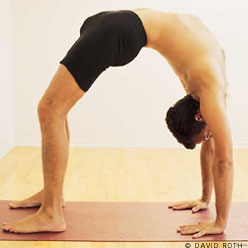
YOGA | Wheel

H’s a nice Australian yoga teacher who came over to teach. How do I know he’s Aussie? Occasionally he comes to class in a singlet with "Australia" printed straight across the back. No one but an Aussie will wear a shirt like quite so unabashedly; feels like someone stuck a "Kick Me" note on his back.

Now, H. is a nice, funny guy who also happens to be a good yoga teacher. He has a slacker-dude sense of humour that I appreciate. His humour and chatter lifts the mood of his classes – important when your muscles are burning from holding the pose.


Last Saturday was Power Yoga 1 with H. Personally I find Power Yoga more demanding as I lack upper body strength. Last Saturday we were supposed to do Urdhva Dhanurasana (Wheel Pose). As you can see from the picture, it requires strength in the arms, shoulders and thighs: the areas of the body that I have yet to develop. Baron Baptiste calls it "one of the most powerful poses in yoga practice" – and he meant it.


H. understood not everyone is ready for it, and explained we do not have to try it if we are not ready. The first rule of yoga is Awareness. Be aware of yourself. Know your limits – when to surrender, when to push a little further.

I attempted the Wheel Pose that day. H. saw what I was doing, and he told me to stay down; I was not ready to go up.

When the class prepared to do the Wheel Pose for the second time. H. came over. He asked me to hold his ankles, to give me a better leverage in the arm-lifts. He assisted me in a modified version of Wheel Pose. I was grateful.

Later, addressing the class, H. reminded us that not everyone is ready for all the postures. But he will always allow us the choice to surrender or to attempt the asana. We make the choice. At the end of the day, it is our own practice.

I first learnt yoga more than three years ago in a crowded gym studio. I did yoga 3~4 times every week for more than a year. M, the yoga teacher, was a wound-up core of sheer yogic stamina. Her classes were demanding - and her battle-axe personality was intimidating. She pushed her students, sometimes shouting at them from across the room. I persisted, and because of her I grew stronger. We did Wheel Pose every Thursday. Didn’t matter if you can’t, you just try. If for no other reason, you tried because M was so scary. Then one day, I lifted.

I still remember the first time I went up in a Wheel Pose: The thrilling sensation of power as I pushed my body higher. I wanted to stay in the pose for a long time. My body was light, liberated.

In Urdhva Dhanurasana, I felt like I could fly.

Then I quit the gym. Without the regular yoga practice, I lost the muscular strength. And I couldn’t do the Wheel Pose last Saturday.

But in all that time at the gym, I have never felt so supported and safe - as I did last Saturday in H’s class.

I am grateful to H. – that he saw I was not strong enough, yet supported me in my struggling endeavour. I will continue working at my practice. I will continue to try the challenging poses. And I know H. will watch over me as I explore. I am grateful for a teacher that makes me feel safe.

Most of all, I want to fly again.

Monday, September 04, 2006

Salon's Literary Guide On China

I admit Salon.com's Literary Guide to the World starts with good (albeit ambitious) intentions. As Hillary Frey, Books editor at Salon wrote in her introduction:
"From Turkey to Togo, D.C. to L.A., Rio to Russia and beyond, the Guide promises to recommend the best books -- fiction, history, memoir or otherwise -- to take with you on your travels."

It's never an easy task, doing recommendations like this. Lists are often highly personalised choices, and doomed to the limitations of the people doing the selection. You will always be criticised for what you include, as well as your omissions.

But I have to bitch about the selection for China. Any list that does not include Louis Cha (or Jin Yong) in their list of great literature of China, does not understand Chinese Literature.

I happened onto the Chinese newspaper recently. In a study done on the national reading habits of the Chinese, Louis Cha ranked #1 as Best Loved Author. This is followed by Ba Jin and Lu Xun. Qiong Yao comes in at #4, but let's not go there. (My mother almost named me after a character from one of Qiong Yao's novels, so we really should not mention Qiong Yao here)

Louis Cha's novels are mainly in the wuxia (martial art) genre. The wuxia novel is rather unique to Chinese culture and I believe, the main reason why it resists translation into English, and why it's not better known among English-speaking readers. It's a pity, because in the same survey on Chinese reading habits, wuxia is the most read genre of choice amongst the Chinese.

In case you're interested, this is Nell Freudenberger's selection for Salon's Literary Guide to China:

  1. The Search for Modern China by Jonathan Spence
  2. Selected Stories by Lu Hsun
  3. Wild Swans by Jung Chang
  4. Ocean of Words by Ha Jin
  5. Oracle Bones by Peter Hessler

GUARDIAN REVIEW | Unsworth on Claudius

In The Guardian Review, Barry Unsworth writes on Robert Graves' Claudius novels (I, Claudius, Claudius the God) - which I have included in my 100 Books to Read 2006.

BOOKS | Turkish Literature

Salon's Literary Guide to the World goes Turkey

LIFE | SIMS 2, Books, Yoga

It is Monday again, so we due for another extract from Ms Winterson's The Times online column.

In case you're interested, you can read the column here.

I'm behind schedule on my reading of the Proustian epic. But in spite of my distractions, I still find the Proustian search of lost time seeping into my life and the things I read online.

Ms Winterson wrote on reading, and how we experience time:

If reading reclaims time, it realigns time too. Time for us is always slipping away — we talk about losing time, finding time, making time, and taking time. The wellbeing that we feel when we don’t notice time, because we are happy, or engrossed or in love, is the result of those rare moments when time inside us and time outside us are not in conflict. Reading is another way of allowing this to happen and, as it becomes a habit, like all habits, it affects the rest of our behaviour too. No question, reading is good for you.
I'm feeling that mild distress of "having not enough time." Between work, yoga and the rest of life (this includes chores like laundry) - I find less time to read.

For the past month I've stayed on course with my renewed commitment to my yoga practice. I go for yoga class straight after work, which means the earliest I reach home on weekdays is around 9pm. Dinner has become optional - but reading is still a priority after yoga.

I had intended to finish James Ellroy's The Black Dahlia over the weekend. I have not kept to this goal because I installed SIMS 2 on my laptap on Friday. I've been staying up late playing this game of simulated life - and it's addictive. On Sunday morning, I was up until 5 am even when I had a 11:45am Power yoga class later in the morning. Needless to say, it was a strain.

(Okay, I know - why not just skip yoga class and sleep in? Because I don't want to make it a habit of skipping class, that's why.)

Last night (or this morning) I was up until 3 am on the game. I woke up late for work this morning because of this. And I will be missing yoga class tonight. After work today, I'm going straight home to uninstall SIMS 2 - before it becomes a habit.

During the final years of university, a classmate neglected her thesis because she was addicted to MUD (Multi-User Dungeon). I have a similarly addictive personality, which is why I know I have to quit this gaming habit cold-turkey before it gets worst.

We are what we eat (and I'm also reading Fast Food Nation, so that's a scary notion) - similarly, the quality of our lives depends on what we spend time on. SIMS 2 allows me to control the lives of game characters. But I've neglected my own life in the process.

What I've absorbed from the Proust's epic is its journey for time lost. I speak of "lost" in the sense of time wasted. Like Charles Swann, after he fell out of love with Odette, I reflect on the time wasted in my life on things (and people) that did not matter. The revelation came only after I lost them. I decided there are things that are important and worth spending time on. I would rather give my time to family, friends, yoga and books.

This said, I'm taking time off yoga this Friday to meet up with Ms Foo and a mutal friend. Ms Foo will be flying on 18th September for her MA at East Anglia. She will be sorely missed for the year she will be gone.

Wednesday, August 30, 2006

BOOKS | Fast Food Nation and French Fries

Fast Food Nation


From my trusty Bag of Books:

Fast Food Nation:
The Dark Side of the All-American Meal

By Eric Schlosser

I'm in the middle of Fast Food Nation (brought it to work today) and I came across something that has convinced me NEVER to touch the fries at MacDonald's EVER AGAIN:


For decades, McDonald's cooked its french fries in a mixture of about 7 percent cottonseed oil and 93 percent beef tallow. The mix gave the fries their unique flavor - and more saturated beef fat per ounce than a McDonald's hamburger.

Tuesday, August 29, 2006

COMICS | Wonder Woman: Paradise Lost

Wonder Woman: Paradise LostI've been on a Wonder Woman reading spree - all thanks to the graphic novel section at the library@orchard. The selection is half-decent, and I've managed to pick up a few Batman and Wonder Woman trade paperback.

Last night I was halfway through Wonder Woman: Paradise Lost. After a bloody civil war between the rivaling factions of Amazons, Queen Hippolyta (mother of Diana aka Wonder Woman) abolished the matriarchy of Themyscira. This effectively removes Diana from her position as Princess of the Amazons. This marks a change in status for Wonder Woman, and also sets up a potential rift in mother-daughter relationship between Hippolyta and Diana in the future.

For me, Wonder Woman is forever represented by Lynda Carter's warm and elegant portrait. I have a poster of Wonder Woman in my room, by the artist Alex Ross (the portrait looks uncannily like a water-colour rendition of Lynda Carter.) But what I noticed in the comic presentation (from what I've read so far) is that the character suffered when her writers who don't know what to do with her. Wonder Woman is one of the Trinity of the Justice League America (JLA) - but it's sad when she is often made to feel more like a supporting character.

What I found annoying about Paradise Lost was when Wonder Woman ask a handsome Trevor Barnes out for a date - only to have him turn her down. The device is of course to humanise Wonder Woman: Look - even Wonder Woman faces romantic rejection. She's just like us. Awwww! Poor Wonder Woman My response: *roll eyes* Please! I find it obvious and unconvincing. The relationship, or rather Wonder Woman's crush on Trevor Barnes suffers from the lack of build-up - like Wonder Woman herself, a failure of sufficient development. I think the character deserves better. Also, how typical (here I may be accused of being feminist) to go for the "girls need to be boy-crazy to be normal" shortcut.

A major missed opportunity for character exploration is Wonder Woman's semi-exile from Themyscira. She relinquished her title as Princess of Themyscira for the sake of her motherland, and yet at the end was told her presence on the island was disruptive to the new order. This was only briefly mentioned, and sneaked in during a bitchfest with Lois Lane (over, of all things - Superman). I would think a better writer would explore this pain of exile and fall-from-grace in greater depth.

It is easy to attribute it to the poor comprehension of male writers of strong female superheroes. But Joss Whedon has done splendidly fleshing out Buffy the Vampire Slayer - so men can write kickass female superheroes without sacrificing their femininity. I'm gratified that Joss Whedon will be doing the script for the upcoming Wonder Woman movie.

The best writer for the Wonder Woman comic so far seems to be Greg Rucka, who brings out the mythic element in her. This is Wonder Woman afterall - she is gifted with the speed, strength, beauty and wisdom of the Greek gods. The challenge to Wonder Woman writers is how they can balance the ultimate paradox - the god-like heroine who also embodies the best of humanity? She is the bearer of Truth. She cannot lie - that is the burden, symbolised by the Lasso of Truth that she wields. How do you retain the iconic status of this character without reducing them to a two-dimensional caricature?

Monday, August 21, 2006

Brooks on Camus's The Fall

Since Bush is reading Camus, more Camus commentary has been unearthed. Here is Peter Brooks's article on Camus's The Fall and the idea of torture.

What Albert Camus and the "little-ease" say about U.S. torture policies.
By Peter Brooks
Posted Tuesday, Jan. 3, 2006, at 4:01 PM ET
Camus wrote The Fall during the Algerian War, when France was beginning to face a crisis of conscience over torture similar to what the United States faces now. Indeed, clear parallels exist between the French experience in Algeria and the American experience in Iraq: Like the war on terror, much of the French effort to pacify and retain Algeria was waged against a nearly invisible enemy that tended to melt into the landscape. Intelligence-gathering was crucial—and that led to torture.


See full Slate article. Link via Literary Saloon.

Friday, August 18, 2006

D'OH | Bush Reads Camus

The world is talking about George W. Bush reading Camus's L'Estranger. Now, I have been bitching about this to my colleague for the past few days.

Firstly: Just because he quotes from the book (probably written by someone else for him) doesn't mean the President has actually read the book personally.

Secondly: If he really did pick it up, it's probably because he thought L'Estranger is a nice short book. Easy to read.

But maybe it's just the gripping storyline that caught Bush's attention.

On an aside: Harry Potter is more well-known than Tony Blair in a survey on Americans. This, the nation that voted George W. Bush, Camus-reader, for 2 Presidential terms.

Thursday, August 17, 2006

Comedy by Swann’s Way

I'm going back to the parts of the Proustian Epic that made me laugh.

Legrandin is an acquaintance of the narrator’s family, who happens to be a social-climbing snob who couldn’t quite admit to his snobbery. The narrator relates that his "Mama was infinitely amused each time she caught Legrandin in flagrante delicto in the sin that he would not confess, that he continued to call the sin without forgiveness, snobbishness." His obsession is with hob-nobbing with those he considers the upper-class. So concerned with the social glamour of his associations, he often pretends not to recognise the narrator’s family, so that it will not reflect poorly on him.

One of the funniest scenes in Swann’s Way takes place when the narrator and his grandmother were planning a holiday to Balbec. Legrandin has a sister living only a mile from the place. The narrator’s father thought of asking Legrandin for the sister’s address, just in case:

…my father, curious, irritated, and cruel, said again:

"You know Balbec so well—do you have friends in the area?"

In a last desperate effort, Legrandin’s smiling gaze reached its highest degree of tenderness, vagueness, sincerity, and distraction, but, no doubt thinking there was nothing else he could do but answer, he said to us:

"I have friends whever there are companies of trees, wounded but not vanquished, which huddle together with touching obstinacy to implore an inclement and pitiless sky."

"That was not what I meant," interrupted my father, as obstinate as the trees and as pitiless as the sky. "In case something should happen to my mother-in-law and she needed to feel she was not at all alone in an out-of-the-way place, I was asking if you knew anyone there?"

"There as everywhere, I know everyone and I know no one," answered Legrandin, who was not going to give in so quickly; "I know a great deal about things and very little about people. But in that place the very things themselves seem to be people, rare people, delicate in their very essence, disappointed by life. Sometimes it is a manor house that you encounter on a cliff, by the side of a road, where it has stopped to point its sorrow toward the still pink evening where the golden moon rises while the returning boats, fluting the dappled water, hoist the flame of evening on their masts and carry its colors; sometimes it is a simple solitary house, rather ugly, its expression shy but romantic, which conceals from all eyes some imperishable secret of happiness and disenchantment. That land which is so lacking in truth," he added with a Machiavellian delicacy, "that land of pure fiction makes poor reading for a child, and is certainly not what I would choose and recommend for my little friend, already so inclined to sadness, for his heart, already so predisposed. Climates of amorous confessions and vain regrets may suit a disillusioned old man like me, but they are unhealthy for one whose temperament is not yet formed. Please believe me," he went on insistently, "the waters of that bay, already half Breton, may act as a seedative, though a questionable one, on a heart like mine that is no longer undamaged, on a heart for whose wounds there is no longer any compensation. They are contraindicated at your age, my boy. Good night, neighbors," he added, leaving us with that evasive abruptness which was his habit and, turning back toward us with a doctor’s raised finger, he summed up his advice: "No Balbec before the age of fifty, and even then it must depend on the state of the heart," he called to us.

Although my father talked to him about this again in our subsequent encounters, torturing him with questions, it was a useless effort … M. Legrandin, had we insisted further, would have ended by constructing a whole system of landscape ethics and a celestial geography of Lower Normandy, sooner than admit to us that his own sister lived a mile from Balbec …

Tuesday, August 15, 2006

Bookstore Speed Dating

Jessa Crispin, the Bookslut goes speed-dating in a bookstore. What will they think of next? The whole enterprise is a punchline waiting to happen.

But then, it gives a dim view of straight men and their reading habits. Maybe only gay men can go cruising in bookstores these days.


Who knew that six minutes could last so very, very long?

I truly thought going into the event that the attendees would be the bookstore’s customers. Not so. Evidently, this speed-dating event happens every week, most of the time taking place at a bar. Many of the men had come to these before. I asked each speed dater, "Have you been to this bookstore before?" Not a single one had.

During the break, I wandered by the line for the bathroom, and the women looked shell-shocked. "How’s it going?" I asked. Women nearly crumpled into piles on the floor. "Who are these people?" one woman holding an Alex Kotlowitz book asked me. Joanne had been quizzing the men about what their favorite books were, and the responses were interesting. "One said his favorite author is Donald Trump," she told me. I guessed that had been a certain balding accountant, and I was right. "But he’s not even like a real accountant," Joanne said, gripping my arm. "He’s in payroll."

The second half of the evening went no better. There were two men who barely spoke English. Another guy in a Cubs t-shirt. One guy was really into Philip K. Dick, and I started to perk up a bit, but then he said he was a bouncer at a generic local version of Hooters.

Another gentleman said he was reading Catcher in the Rye at the moment. "Oh, that’s a good book," I told him. "Have you read it before?"

"I heard the guy that shot Ronald Reagan was carrying it on him and had to check it out!" says he. "It's a crazy book!"

I thought it was the guy who shot John Lennon that had Catcher in the Rye?

Friday, August 11, 2006

Translation

How do I feel about the new translations? Obviously it depends on the translator. Translation at the end is about rendering the original/foreign understandable to us, the modern reader. I do not agree that a 19th century translation is necessarily the best translation of a 19th century novel, though some have argued for it. The simple fact is that I am not a 19th century reader.

Constance Garnett (December 19, 1861 - December 17, 1946) is the earliest translator of Tolstoy, Gogol, Dostoevsky and Chekhov. She is responsible for introducing the Russian masters to the English-reading public. Her life’s work made all subsequent English translations of Russian literature a little easier, I believe.

Constance Garnett's translations of Russian classics were highly acclaimed in her time and many established literary criticisms use the Garnett version for reference. Yet for the contemporary readers, the Garnett translations now feel outdated. Also, while she kept close to the syntax and vocabulary of the original, she occasionally excised certain portions liberally, as in her translations of Dostoevsky. Dostoevsky was ahead of his time, and Constance Garnett’s Edwardian sentiments and language stifled his style.

But I admit there are some idiosyncrasies I am partial to. I once came across a contemporary translation of the Christian Bible which has the Ten Commandments going "Do Not Steal" etc.

I want my "Thou Shalt Not …" thank you very much. The Bible is evergreen and should not be updated.

Thursday, August 10, 2006

New Translations

I came across this article entitled "Flood of re-translated classics hits shelves" by Jeffrey A. Trachtenberg.

Lots of classics are getting new translations. No surprise.

Robert Fagles will have a new translation out later this year: The Aeneid. I have his renditions of The Iliad and The Odyssesy, so I'll definitely pick up The Aeneid to complete the collection.

But probably only in the Penguin Deluxe paperback.

As for the Russian masters:
In January, Viking released a version of Leo Tolstoy's "War and Peace," the first new English translation in nearly 40 years of the sprawling Russian saga about the Napoleonic Wars. A blurb on the back jacket of the 1,412-page volume, translated by Anthony Briggs, calls it "the best translation so far of Tolstoy's masterpiece into English."

In fall 2007, Everyman's Library is coming out with its own "War and Peace," translated by husband-and-wife team Richard Pevear and Larissa Volokhonsky. "It will be our most important new translation of the year," says LuAnn Walther, the imprint's editorial director.

I have the Anthony Briggs translation, which I'm reading in bite-size right now. But if I knew then that the Richard Pevear and Larissa Volokhonsky translation will be out in 2007, I would have gladly waited. Their treatment of Dostoevsky gave me confidence in their Russian translations. It brought the energy and passion back into his language that earlier versions lack. Dostoevsky was not a stiff-upper lipped Victorian gentleman and translations that made him sound British missed the point entirely. The Dostoevskian soul is closer to a manic-depressive. At least that's how I see it.

One of the crtics against new translations is Andre Aciman - not that he is against them, but he pointed out that not all new translations necessarily improves on the original. Sometimes, the new translation is just plain jack-assed. Of course, he phrased more politely:
He specifically criticizes the decision by Viking Penguin to change the title of the second volume of Marcel Proust's novel "A la recherche du temps perdu" in a 2004 translation, from Within a Budding Grove to In the Shadow of Young Girls in Flower. He describes the new title as "monstrous." "Do you know what that means, because I don't," he says.

Andre Aciman also edited the compilation, The Proust Project - which has different writers writing about their favourite passages from "The Proustian Epic." I am going to just call it "The Proustian Epic" because to call it either "Remembrance of Things Past" or "In Search of Lost Time" is getting my hands dirty on choice of translators.

On a personal note: I like the Lydia Davis translation of Swann's Way. Granted I have read no other translations to make a comparison, but Lydia Davis's effort rendered the sinuous prose intimate and endearing.

I've just started on James Grieve's translation, In the Shadow of Young Girls in Flower.

Already, I feel the difference. Sorely.

Full article.

Tuesday, August 08, 2006

Too Many Books

From The New York Times, Joe Queenan writes on the problem we share: we are the kind of readers that start on too many books.

I'm a promiscious reader, really. A philandering reader that flirts from book to book. Now if only my love life is just as excited and varied. But then again, better not. ;p

Currently I'm reading Leo Tolstoy's War and Peace, Marcel Proust's Swann's Way, Wilkie Collins' The Moonstone and a few other books. I do feel that it reflects badly on my sense of focus.

Still, I like the cashier at the end:
A few weeks ago I visited the superb postage-stamp-size bookstore in Grand Central Station, where I bought Andrea Barrett’s Voyage of the Narwhal. Since I had only just started Tacitus’ Annals of Imperial Rome the night before, this was hardly an essential purchase. But for whatever reason, I had to take a crack at that book. Some people go into bookstores and are seduced by classics they absolutely must own; I go into bookstores and am seduced by classics I absolutely must start.

"I’m already reading 25 other books, so why am I buying this one?" I asked a friend. "Do you think this is a disease?"

"Yes," interjected the cashier. "But it’s a good disease to have."

Thursday, August 03, 2006

What Have Sonny Got to Do with Proust?


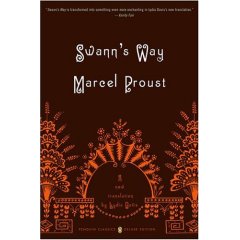
I am reading Proust in the pretty Penguin USA Deluxe edition - the one with the deckled edge and the french flap. Yes, affectations, but I like these pretty stuff on my bookshelf. But right now, only the first 4 books of the Proustian epic is available in this edition. it drives me nuts.

Did I mention my Sodom and Gomorrah is in the Penguin UK black hardcover edition? I got it for free so, no excuse.

According to this Slate.com article:
Only the first four volumes of the new translation—from Swann's Way through Sodom and Gomorrah — are available here. For this we have Sonny Bono to blame. Just before he died in 1998, the congressman sponsored a bill to extend the term of copyright by 20 years: According to the Sonny Bono Copyright Act, passed later that year, rights would expire 95, rather than 75, years after an artist's death. Since Proust died in 1922, only those four volumes first published during his lifetime had passed into the American public domain by the time the Bono Act became law. It will therefore be at least 2018 before readers in the United States can find the final three installments of the new translation (The Prisoner and The Fugitive, and Time Regained) in their local bookstores.

So American readers are screwed because late congressman Sonny Bono (the male and dead half of the duo, Sonny & Cher) decided to intervene and extend the copyright period. This stupid law benefits nobody but parasitic family members of the dead authors.

This is what happens when celebrity goes into politics.

Wednesday, August 02, 2006

PROUST | Fall In Love By Swann's Way

He told himself that, in associating the thought of Odette with his dreams of happiness, he had not been resigning himself to a second best as imperfect as he had believed until now, since she satisfied his most refined artistic tastes. He forgot that this did not make Odette any more the sort of woman he desied, since in fact his desire had always been oriented in a direction opposite to his aesthetic tastes. The words “Florentine painting” did Swann a great service. They allowed him, like a title, to bring the image of Odette into a world of dreams to which it had not had accesss until now and where it was steeped in nobility. And, while the simple view he had had of this woman in the flesh, by perpetually renewing his doubts about the quality of her face, her body, her whole beauty, had weakened his love, these doubts were vanquished, that love confirmed when he had instead, for a foundation, the principles of an unquestionable aesthetic, while the kiss and the possession that would seem natural and ordinary if they had been granted him by damaged flesh, coming as they did to crown the adoration of a museum piece appeared to him necessarily supernatural and delicious.

~ Swann’s Way, pp 232~233

Proust makes it clear that to appreciate art is an active endeavour, to work at and to cultivate. Gentlemen, like M. Swann set out to work on studying the masters, like Vemeer. Ironically, love by Swann’s way is similarly an active endeavour. One categorizes, classify and then learn to love, like M. Swann who learns to love Odette after he learns to identify and admire her beauty as a Florentine painting.

And this is the part that bites me about the world of the Proustian epic – even love itself is an artifice. One does not just fall in love, but love is itself an imagination, a performance, a study.

Why am I reading this?! The world they live it goes against everything I stand for!

Tuesday, August 01, 2006

PROUST | Swann In Love

Swann's Way
Update: 1st August 2006

I'm now into the second chapter of Swann's Way, the first book of the Proustian epic. That's only about 280 pages. Long way to go. Heh.

I had not expected to like Proust quite so much.I enjoyed how he captured the comedic side of the neurotic but snobbish middle-class. Even his narrative meandering is fun (much, much more than Umberto Eco's meandering).

In the "Combray" chapter of Swann's Way we are introduced to M. Swann as a neighbour, somewhat fallen from favour with the narrator's family due to Swann's marriage to a lady of dubious repute. "Swann In Love" elaborates on the story of his unfortunate romance with the shady but manipulative demimondain, Odette de Crecy, who will later be his wife.

CAMUS | The Plague to Despair

James Heffernan from The Huffington Post suggests Albert Camus's The Plague as antidote to the current Israel-Lebanon conflict.

It was written during the Second World War, when-not satisfied with the ten million deaths achieved by the first one-the most powerful nations of the world were doing their best to kill even more. Camus had a different agenda. Published in June, 1947, barely two years after the war ended in Europe, his novel says nothing directly about the war, but in telling the story of what a Bubonic plague does to the coastal Algerian city of Oran in the 1940s, it symbolically represents what war did to Europe in the same period. At one point, in fact, the narrator of the novel openly compares plagues to wars. Both, he writes, take us equally by surprise, and both commonly last longer than we expect them to. Also, neither one is ever wholly defeated. Like the plague, war will always come again.

But this is only a part of the final message of the book, which is narrated by a doctor who tells his own story: a doctor who sees his patients dying all around him and yet who never stops trying to save and comfort them, and never stops inspiring others to do likewise. In the end, he says, this tale records what had to be done and what must be "done again in the never ending fight against terror and its relentless onslaughts." If those words seem uncannily prophetic, consider what he says about how the fight against terror should be waged. "Despite their personal afflictions," he says, it must be waged "by all who, while unable to be saints but refusing to bow down to pestilences, strive their utmost to be healers."


Full write-up.

Thursday, July 27, 2006

Reading Break by Reading

Have interrupted my reading of Swann's Way and War and Peace with ... The Moonstone.

Wilkie Collins's The Moonstone is one of the classic detective novel of the 19th century. Dickens stole something from it for Edwin Drood. Dorothy L. Sayers admired it. It's also a sensation novel that thrives on intrigue and semi-colonial romanticism.

Good brain junk food.

Monday, July 24, 2006

PROUST & TOLSTOY


I'm still reading Swann's Way intermittently with War and Peace.

The question arises last night on how one can do such heavy reading at the same time? My explanation: short but frequent readings - kind of like watching Desperate Housewives and Lost in the same week, but somehow you can still follow the storyline.

Yoga Ache

Power Yoga 1 last Sunday with HB.

I am out of shape. Just a few rounds of Sun Salutations and my triceps and shoulders ache.

Out of shape. Which means I need to work on Power Yoga.

Yin yoga today with A.

WINTERSON | Books Are More Than Product

From Jeanette Winterson, The Times Online, 22 July 2006

Books are not beyond money, but they are not only about money either. Once the risk and the love are gone, books become product like everything else. But I won’t accept that books are just product like everything else.


Neither would I - me, the book buyer/book seller, and anyone who collects books because of a muddled kind of love.

Full article.

Tuesday, July 18, 2006

PROUST | The Person That We Know

Reading Swann's Way (very slowly). Highlighted the passage on identity:
Even the very simple act that we call "seeing a person we know" is in part an intellectual one. We fill the physical appearance of the individual we see with all the notions we have about him, and of the total picture that we form for ourselves, these notions certainly occupy the greater part.

The child narrator relates how his family seem to blinker themselves to Charles Swann, choosing what they want to see instead.

We probably have known instances when our friends see us only as their notions of us, not as ourselves truly.

Charles Swann is obviously a greater man of the world than the family wishes to allow. He is a man with the kind of prestiguous contacts and glamorous acquaintances that you only read about in Le Figaro. Yet, the narrator's grandmother only sees him as the son of their neighbour.

It says something about the inherent tunnel vision of the narrator's family - which admits only that which it is comfortable with, and blinds itself to that which is potentially new, and bigger, if not fuller. Later the narrator tells us about his aunt, who is disturbed if there should be anyone in her small village that she knows nothing about. When that happens, she sends her servant to the grocer (the fount of local gossip apparently) for intellgience.

While I am charmed by the wispy recollections filled with comforts and gentle, familiar pleasures, Combray strikes me as a hermetic society.

Saturday, July 15, 2006

Those Who Have Courage to Love

"Those who have courage to love should have courage to suffer."

~ Anthony Trollope

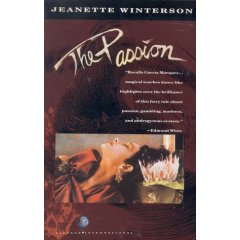
I wrote this little quote in my copy of Jeanette Winterson's The Passion.

The Passion

Back to Yoga

Just signed up with Pure Yoga. So I'm back to my practice, slowing rebuilding my stamina and strength.

From someone who previously fell to 1 practice session a week, I'm now doing it 4-5 times a week. I see it as progress, although it could be another indication of my addictive personality.

Meanwhile, I would like to introduce everyone to my new yoga practice: Yin Yoga.

In a nutshell, you hold your poses in Yin Yoga for 3-5 minutes. The emphasis is on the connective tissues, and there are a lot more hip-opening poses. I find that I enjoy it.

My Italian Reading List

The Guardian's Culture Vulture visits Italian Literature

Actually, they've been at it for a while. From all the various posts, I've gleaned a few Italian authors that I would like to sample:

Luigi Pirandello: The Late Mattia Pascal
Italo Svevo: Zeno's Conscience
Alberto Moravia: The Conformist
Giuseppe di Lampedusa: The Leopard
Cesare Pavese: Among Women Only; The Moon and the Bonfire

Also adding Umberto Eco: The Name of the Rose for next year's reading list.

Umberto Eco Unfinished

I need to finally sit down and finish Umberto Eco's The Name of the Rose. I first read (but never finished) the book in 1999. I brought it with me to the beaches of Koh Samui straight after graduation, but the leisure beach-bum life got in the way.

The only Umberto Eco I actually finished reading was Foucault's Pendulum. It helped that I was reading it when I was supposed to be working on my thesis: William Gibson and the Cybergothic.

The dilemma: work on thesis or read Eco's meandering book.

I chose the latter, but it still a long time. I would read a few pages, then set it down (bookmark in place). After some time (maybe a few months later), I would pick it up again, and continue. That took two years.

Ms F asked if I enjoyed it. I replied 'no'.

"That's so sad!" she blurted.

"No," I insisted. "In between I did other things."

Remember: reading is as healthy an interest as sports - but you're supposed to have a life.

Friday, July 14, 2006

QUIZ | What European City Do You Belong In?

I don't agree. I so prefer to be in an Italian city. Can I belong in Rome?

You Belong in Paris

You enjoy all that life has to offer, and you can appreciate the fine tastes and sites of Paris.
You're the perfect person to wander the streets of Paris aimlessly, enjoying architecture and a crepe.

Wednesday, July 12, 2006

From Neil Gaiman's Stardust

From Neil Gaiman's blog on the movie adaptation of Stardust:

Right. Now I'm going down to the set to watch Michelle Pfeiffer cut poor Jason Flemyng's throat with a big black obsidian-glass knife.

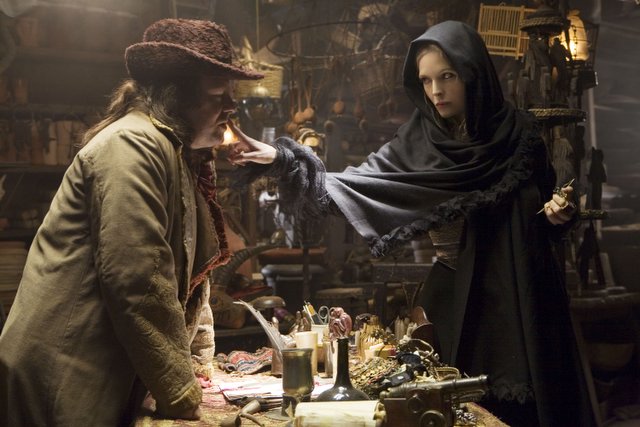
Ha! Michelle Pfeiffer in any sort of gratuitous violence is SOOOOO something I want to see! Here's a preview screenshot from the Stardust movie:

Stardust

Michelle Pfeiffer in scary pose. I like!

Screenshot courtesty of Ain't It Cool News

Tuesday, July 11, 2006

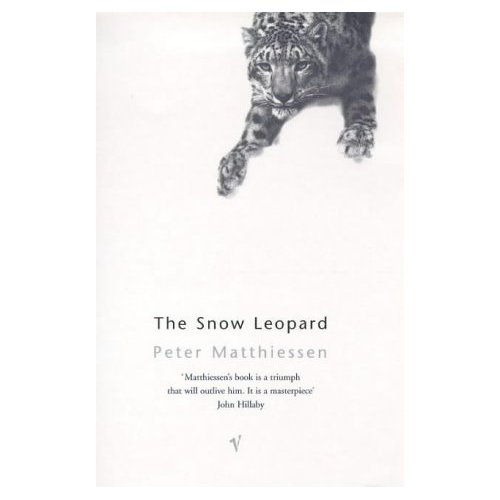
BOOKS | The Snow Leopard by Peter Matthiessen

The Snow Leopard

The Snow Leopard
By Peter Matthiessen
London: Vintage, 1998
[01/06/2006 ~ 10/07/2006]


In the two hours before my yoga class last night, I finally finished re-reading The Snow Leopard. It took a while - more than a month. Perhaps I did not wish to rush it. I also know that this is a book I will re-read in the near future.

In 1973, Peter Matthiessen and George Schaller (a field biologist) travelled to the Crystal Mountain in the Himalayas. Schaller was there to study the blue bharal sheep, while Matthiessen had hoped to see the legendary snow leopard. The elusiveness of the snow leopard lent it a mystical quality. The great Tibetan yogi, Milarepa was said to have taken the form of the snow leopard.

Back then, Peter Matthiessen was also a student of Zen Buddhism. Before he left, his roshi (his Zen teacher) warned him to "Expect nothing." The roshi also issued him a koan:

All the peaks are covered with snow – why is this one bare?

Thus journey is pilgrimage, is meditation.

"I long to let go, drift free of things, to accumulate less, depend on less, to move more simply," he writes. One of the fundamentals of Buddhism – the religion of the land they tread - to simplify, to let go and thus liberate yourself from suffering.

In between the narrative of his journey and the exposition on Buddhism – Matthiessen writes about his wife, Deborah, who died a year before. He reveals his love for her, and his regrets. He also writes about the enigmatic Sherpa guide, Tukten – a dubious figure who is also a tulku – a reincarnate of a learned lama.

Matthiessen never saw the snow leopard. In the acceptance of his non-encounter is the triumph. The paradox in spiritual quest that I have only begun to sense but not yet comprehend.
If the snow leopard should manifest itself, then I am ready to see the snow leopard. If not, then somehow (and I don’t understand this instinct, even now) I am not ready to resolve my koan; and in the not-seeing, I am content. … That the snow leopard is, that it is here, that its frosty eyes watch us from the mountain – that is enough.

I am still looking. Matthiessen tells me, that is enough.

Monday, July 10, 2006

Rail Into Tibet

World Hum reports on the newly inaugurated railway into Tibet.

Not very positive.

Reading List

On the upside of reading:

As of 9th July, I've managed to complete 66 books for the Year 2006.

And I'm one-third done on my 100 Books to Read list for 2006.

Group Reading Thing

Caught DY with her husband, DT on Saturday evening - right before WW's big KTV gig (about that later)

DY and I were just chatting about how small the world is, where you keep running into people you know - and DT commented, that ironically, it's too big to meet up for a bookclub.

Oops. When we failed to read Robertson Davies, we just lost the momentum.

As for the follow-up - I guess His Dark Materials was a little too heavy for a bookclub (3 books!) DY suggested perhaps we could do Jonathan Safran Foer's Extremely Loud and Incredibly Close instead.

I winced. Not a book I want to read. Really. I rather do War and Peace - but I don't think Tolstoy's going to get a positive response from my fellow bookclub members.

Anyway, here's my plug on Involuntary Memory - it's a Reading Group for Proust. *Woooooow*

They're just warming up the gig so there should be some time to catching up on the reading. I'm interested but with my current commitment to War and Peace and other books, I wonder if I can do the 50~60 pages of Proust every week.

**I think I can. I think I can.**

Wait, this means I might not make it for my own bookclub. Heh.

BOOKS: Jane Smiley's Reading

Jane Smiley has a weekly column in The Guardian, where she comments on the 100 novels she has read. It's also the basis for her recent book, 13 Ways of Looking at the Novel.

July 8, 2006: Beloved by Toni Morrison

July 1, 2006: Annie John by Jamaica Kincaid

June 24, 2006: Main Street by Sinclair Lewis

June 17, 2006: The Man without Qualities by Robert Musil

June 10, 2006: The Man Who Loved Children by Christina Stead

June 3, 2006: The Once and Future King by TH White

May 27, 2006: The Good Soldier by Ford Madox Ford

May 20, 2006: Zeno's Conscience by Italo Svevo

May 13, 2006: House of the Seven Gables by Nathaniel Hawthorne

May 6, 2006: Cousin Bette and Cousin Pons by Honore de Balzac

April 29, 2006: The Awakening by Kate Chopin

April 22, 2006: Taras Bulba by Nikolai Gogol

April 15, 2006: Oroonoko by Aphra Behn

April 8, 2006: Saga of the People of Laxardal

April 1, 2006: Introduction and The Tale of Genji by Murasaki Shikibu

Friday, July 07, 2006

PISSED OFF | Copy Controlled F**K

I hate those Copy Controlled CDs!

Have Beth Orton's Comfort of Strangers and I can't rip it to my mpeg player!