Showing posts with label Jan Morris. Show all posts

Monday, January 25, 2016

Jan Morris, on her writing

Jan Morris, in an interview:

I believe you aren’t fond of the term “travel writer” - what do you prefer? Are you more of a historian of place in books like Venice?
Yes, I hate being called a travel writer. I have written only one book about travel, concerning a journey across the Oman desert. I have written many books about place, which are nothing to do with movement, but many more about people and about history. In fact, though, they are one and all about the effects of everything upon me – my books amount to one enormously self-centred autobiographical exposure! So I prefer to be described as simply – a writer …

Tuesday, January 15, 2008

JAN MORRIS | Among the Spires

Article in the January 2008 issue of the Smithsonian magazine: Jan Morris on the University of Oxford.

Think of this. The most distinguished graduate college at Oxford is All Souls, founded in 1438 and popularly alleged to number among its Fellows the cleverest men and women in England. Once in every hundred years this eminent company celebrates something called the ceremony of the mallard, when it commemorates the fable of a wild duck supposed to have flown out of the foundations when the college was being built. After a good and vinous dinner those academics perambulate the premises looking for the shade of that bird, carrying sticks and staves, led by a Lord Mallard in a sedan chair with a dead duck on a pole, climbing to the roof and singing a gibberish song—Ho, the blood of King Edward, by the blood of King Edward, it was a swapping, swapping mallard.

When in 2001 they celebrated the ceremony of the mallard for the umpteenth time, they printed a booklet about the occasion. On its cover they quoted a contemporary commentator (me, as it happened!) to the effect that no event in Europe could be sillier, "not the most footling country frolic or pointless Anatolian orgy."

Inside the booklet, though, Oxford being Oxford, the Lord Mallard of the day confidently looked forward to the duck's resurrection "in future centuries."

Makes Oxford feel like the Unseen University. :)

Saturday, May 12, 2007

JW | The Passion and Venice Readings

From The Times, Jeanette Winterson goes to Venice.

Her affection for the water city is contagious. I would like to highlight something she writes in the essay:

but I suppose that one’s favourites make a connection between your own imagination and the beat of the city. Like everything about Venice, books, cafés, walks, churches, paintings, buildings, the choice must be idiosyncratic. This isn’t a guidebook city; it is a place of endless discovery, much admired, but known only to you, like a lover who happens to be a great beauty.

A timely reminder to myself, as well as all travelers: discovery is sometimes putting aside the guidebook and just going with a dash of spontaneity.

The main action of her book, The Passion is set in Venice ― yet she admits she wrote it before she ever set foot in the city. Instead, she read three books on Venice and spins her own tale from these sources. But twenty years later, she wrote, "I read three books about Venice before I wrote The Passion and, 20 years later, those three books are still the ones I would chose above all others to find the place as it needs to be found — imaginatively."

Jeanette Winterson's Venetian Threesome:

1. The Stones of Venice, by John Ruskin
“magnificent inquiry into architecture and its social and spiritual effects”

2. Venice, by Jan Morris
“She is incomparable as a travel writer, and the perfect companion for that shape-shifting city, which as a shape-shifter herself, she intuitively understood.”

3. Invisible Cities, by Italo Calvino
“a tribute to Venice in all her disguises”

As usual, I am taking notes. It is important to read about Venice, because it is a lion of a literary city, Byron, Ruskin, Browning, Thomas Mann, Ernest Hemingway, Daphne du Maurier, among others.

I read John Berendt’s The City of Falling Angels a couple of years ago, and his portrait of the dark, ambiguous beauty of Venice enthralled me. I have Henry James' The Wings of the Dove set aside for my Venetian Literary Travel; My copy is the Modern Library edition, because it has an introduction by Amy Bloom ― a writer whose short stories I adore.

Recently I went out to look for Daphne du Maurier’s Don’t Look Now. Most of all, I picked up my old copy of The Passion and re-read parts of it.

The Passion is a work of magic realism set in the time of Napoleon. It is the story of Henri, who loves Napoleon and joins the army to be with his hero. Instead he becomes a chicken wringer in Bonaparte's kitchens. Soon war damages Henri and he realises the object of his adoration was unworthy. He deserts and while on the run, he runs into Villanelle.

Villanelle is the daughter of a Venetian boatman, born with webbed feet. She is a gambler, of cards and of love. She plays, she loses, because she falls in love with a married woman whom she can only wake up to by chance. So she marries to escape from her lover ― but she left her heart behind. Just as well, because where she is going, it is dangerous to have a heart.

Henri falls in love with Villanelle. She loves him, but only as a brother.

The Passion is the story of unrequited loves.

The Passion is the book of Venice, the city of water and smoke:

'This city enfolds upon itself. Canals hide other canals, alleyways cross and criss-cross so that you will not know which is which until you have lived here all your life. Even when you have mastered the squares and you can pass from the Rialto to the Ghetto and out to the lagoon with confidence, there will still be places you can never find and if you do find them you may never see St Mark's again. Leave plenty of time in your doings and be prepared to go another way, to do something not planned if that is where the streets lead you.'
…
'The cities of the interior do not lie on any map.'

Venice is the city of the interior, vast and deadly as labyrinths.

All of Jeanette Winterson's books converge back on her eternal theme of Love.

Some books come to you at a specific moment in your life, a moment of crisis ― and one day you find your feelings for the book are irrevocably changed for the experience. I came to The Passion when I was in love once, with someone who did not love me back; I know one cannot love to order, but the heart grasps at the unattainable.

I took notes, copied lines that left their marks on me, like firebrand:

Do all lovers feel helpless and valiant in the presence of the beloved? Helpless because the need to roll over like a pet dog is never far away. Valiant because you know you would slay a dragon with a pocket knife if you had to.

When I dream of a future in her arms no dark days appear, not even a head cold, and though I know it's nonsense I really believe we would always be happy and that our children would change the world.

I sound like those soldiers who dream of home …

No. She'd vanish for days at a time and I'd weep. She'd forget we had any children and leave me to take care of them. She'd gamble our house away at the Casino, and if I took her to live in France she'd grow to hate me.

I know all this and it makes no difference.

She'd never be faithful.

She's laugh in my face.

I will always be afraid of her body because of the power it has.

And in spite of these things when I think of leaving, my chest is full of stone.

Infatuation. First love. Lust.

My passion can be explained away. But this is sure: whatever she touches, she reveals.

The Passion became the story of my life:

I say I'm in love with her, what does that mean?

It means I review my future and my past in the light of this feeling. It is as though I wrote in a foreign language that I am suddenly able to read. Wordlessly she explains me to myself; like genius she is ignorant of what she does.

Love has passed but The Passion took the place of that private space I once kept for that special someone. I read the resolution of my love in the words of The Passion:

Passion will work in the fields for seven years for the beloved and on being cheated work for seven more, but passion, because it is noble, will not long accept another's left-overs.

And so it is.

Saturday, November 25, 2006

Fourth World

There are people everywhere who form a Fourth World, or a diaspora of their own. They are the lordly ones. They come in all colours. They can be Christians or Hindus or Muslims or Jews or pagans or atheists. They can be young or old, men or women, soldiers or pacifists, rich or poor. They may be patriots, but they are never chauvinists. They share with each other, across all the nations, common values of humour and understanding. When you are among them you know you will not be mocked or resented, because they will not care about your race, your faith, your sex or your nationality, and they suffer fools if not gladly, at least sympathetically. They laugh easily. They are easily grateful. They are never mean. They are not inhibited by fashion, public opinion or political correctness. They are exiles in their own communitites, because they are always in a minority, but they form a mighty nation, if they only knew it. It is the nation of nowhere, and I have come to think that its natural capital is Trieste.

~ from Trieste and the Meaning of Nowhere, by Jan Morris

Thursday, October 26, 2006

JAN MORRIS | Trieste

Melancholy is Trieste's chief rapture. In almost everything I read about this city, by writers down the centuries, melancholy is evoked. It is not a stabbing sort of disconsolation, the sort that makes you pine for death (Although Trieste's suicide rate, as a matter of fact, is notoriously high.) In my own experience it is more like our Welsh hiraeth, expressing itself in bitter-sweetness and a yearning for we know not what.

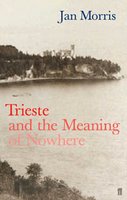
Trieste and the Meaning of Nowhere
By Jan Morris
Published by Faber & Faber

When I found out Jan Morris turns 80 this October I decided I have to pick up Trieste before - well, before anything permanent happens to her. Okay, it's a morbid thought. But as soon as I finished the final pages of The Master and Margarita, I picked up Trieste. And that was 3 am in the morning.

I have always wanted to read Jan Morris, but -->insert excuses here<-- Excuses aside, I've since set down Trieste and the Meaning of Nowhere as the first Jan Morris book to read. Really.

Trieste was said to be her last book. Thankfully, that has been proven to be just an unfounded rumour since the publication of Morris' novel, Hav, in 2006.

What do I know about Trieste? Very little. I happen to know James Joyce lived there for a while, and he taught English to a middle-aged Triestino gentleman who will one day be know as Italo Svevo. Otherwise, nothing at all.

Why does Jan Morris come back to this dead seaport that lies in limbo - officially a part of Italy - yet according to a poll in 1999, 70 percent of the Italian people have no idea Trieste actually belongs to Italy.

Jan Morris first came to Trieste as a young man. It was at the end of the Second World War, and James Morris was a soldier in Her Majesty's service. Decades later, after her gender-reassignation surgery, she returns to Trieste, the city that is for her, "an allegory of limbo."

"My acquaintance with the city spans the whole of my adult life," she writes, "but like my life it still gives me a waiting feeling, as if something big but unspecified is always about to happen.”

Trieste is a place sympathetic to Jan Morris's heart. She tells us of listening to Signor Umberto Lupi, a famous Trieste artist who sang in the Trieste dialect. He is of a certain age himself, and his audience elderly. As Signor Lupi sang his sweet songs, in their language, the eyes of his audience were full of tears. Jan Morris wept with them. Because she knows the songs will not last much longer, because she is at an age where you realise the best years of your life is behind you, and what is to come, dark. This is the state of unease, where you have not yet resigned from life, yet aware of the inescapable decline. Like Trieste, Jan Morris faces these questions: where do you belong in the world? Where do you go from here?

I am homesick, I am thinking sad thoughts about age, doubt and disillusion, but I am not unhappy. I feel there are good people around, and an unspecified yearning steals narcotically over me - what the Welsh call hiraeth. Pathos is part of it, but in a lyrical form to which I am sentimentally susceptible, and at the same time I am excited by a suggestion of sensual desire. The allure of lost consequence and faded power is seducing me, the passing of time, the passing of friends, the scrapping of great ships! In sum, I feel that this opaque seaport of my vision, so full of sweet melancholy, illustrates not just my adolescent emotions of the past, but my life-long preoccupations too. The Trieste effect, I call it. It is as though I have been taken, for a brief sententious glimpse, out of time to nowhere.

Tuesday, October 03, 2006

Jan Morris

Jan Morris celebrates her 80th birthday on 2nd October, 2006.

The Guardian pays tribute to this extraordinary writer.

You can also check out:
1. The Guardian's Quick Guide to Jan Morris
2. Lonely Planet interview
3. Salon.com's Book Bag